ISLAM IN EUROPE

Recent history (19th-21st Century)
kmaherali
Posts: 24541
Joined: Thu Mar 27, 2003 3:01 pm

Re: ISLAM IN EUROPE

Post by kmaherali »

Denmark Moves to Ban the Islamic Call to Prayer Nationwide and Says It Has No Place Over Danish Rooftops

Nationwide ban on adhan ignites debate over religious freedom and secularism
By Catherine Armecin Martin


Muslim praying
Image
PHAROUQENR, CC BY-SA 4.0 , VIA WIKIMEDIA COMMONS

Denmark is moving towards a nationwide ban on the Islamic call to prayer, with senior ministers arguing the public broadcast of the adhan has no place in the country's soundscape. The proposal has triggered fierce debate over religious freedom, integration and whether the measure crosses a constitutional line.

The proposed ban has become one of the most contentious religious policy discussions in Denmark in recent years, with supporters framing it as a defence of secular public space and critics warning it risks marginalising religious minorities.

Why Morten Bødskov Wants Denmark to Ban the Islamic Call to Prayer

//Belfast Islamic Centre Cancels Prayers After Police Warn 'Next 24 Hours' Are Critical Following StabbingREAD MOREBelfast Islamic Centre Cancels Prayers After Police Warn 'Next 24 Hours' Are Critical Following Stabbing https://www.ibtimes.co.uk/belfast-islam ... ns-1801800

Morten Bødskov, Denmark's business minister and a senior figure in the governing Social Democrats, made the government's position clear in unusually blunt terms.

'The call to prayer should not be heard over Danish rooftops,' Bødskov told Ritzau. 'It has no place in Denmark, and you shouldn't be in any doubt whether you've ended up in a suburb of Islamabad when you walk around Denmark.'

He also argued that a creeping 'Islamisation' in Denmark was 'taking up too much of the public space'.

The remarks have drawn attention because they come from a centre-left politician rather than from Denmark's nationalist right, underscoring how immigration and religious integration remain politically sensitive issues across the spectrum.

Only a small number of mosques in Denmark are believed to publicly broadcast the adhan, making critics question whether the proposed ban addresses a widespread issue or a largely symbolic concern. In parts of the country, including Copenhagen, local bylaws already prevent the call to prayer from being broadcast via loudspeakers mounted on minarets because of strict noise restrictions.

Supporters of a national ban say existing municipal rules create inconsistencies and that a nationwide law would provide clarity. Critics, however, argue the proposal targets one faith disproportionately.

Why Denmark's Constitution Could Complicate the Proposed Ban

Any attempt to enact a nationwide ban may face significant legal hurdles because Denmark's constitution protects the right to public worship, making an outright prohibition vulnerable to legal challenge. Restrictions already exist on anti-democratic preaching and support for banned organisations, but banning a religious practice outright could invite scrutiny over whether the state is violating fundamental protections.

Legal experts are likely to focus on whether the proposed measure is proportionate and whether it can be justified as a neutral regulation of public noise rather than a restriction aimed specifically at Islam.

According to reports, Muslims make up roughly 4.5 per cent of Denmark's population, or approximately 295,000 people. And the Muslim population has grown steadily over recent decades, largely due to immigration and second-generation communities.

Social Media Reactions Reveal a Deep Divide Over Religious Freedom

Reaction on social media was swift and deeply polarised. Many X (formerly Twitter) users backed the proposal, arguing that public prayer broadcasts are unnecessary in modern society. Several said smartphones and alarms have rendered loudspeaker calls obsolete, with one user writing that 'in this digital age, no one needs to be called on a tannoy.'

Others framed the issue as one of cultural integration and noise pollution, while calling for similar laws in other Western countries.

Critics, however, described the proposal as discriminatory and warned it could infringe on religious liberty. Some argued that banning the call to prayer amounted to a violation of human rights and freedom of religion, while others accused Danish politicians of embracing populism instead of addressing broader integration challenges.

It's atrocious noise pollution and totally unacceptable for guests of a country to cause such abhorrent cultural vandalism. Be quiet. Do it in silence in your homes

The debate reflects a broader European tension over where governments should draw the line between preserving secular public space and protecting religious expression. As Denmark weighs its next move, that question is likely to remain at the centre of the political storm.

https://www.ibtimes.co.uk/denmark-ban-i ... er-1804886
kmaherali
Posts: 24541
Joined: Thu Mar 27, 2003 3:01 pm

Re: ISLAM IN EUROPE

Post by kmaherali »

Very interesting information just before Hazar Imam's Mulaqat in Germany!

German public university creates Islamic theology faculty
Christoph Strack
07/02/2026July 2, 2026

The University of Münster is the first public university in Europe to establish an Islamic theology faculty, a move that is is attracting international attention.

https://p.dw.com/p/5GRj0
half-finished red brick building sites under construction
Image
The new 'Campus of Religions' at Münster University is still under constructionImage: Uni Münster – Linus Peikenkamp

Since 2021, work has been underway on the new "Campus of Religions" in the western German city of Münster. Much of the site is still under construction. Scheduled for inauguration in 2027, the complex will bring together the faculties of Catholic, Protestant, and Islamic Theology, as well as the Department of Religious Studies, in a single location.

The faculty marks a milestone: for the first time in Germany — and indeed in Europe — a public university is home to an independent Faculty of Islamic Theology.

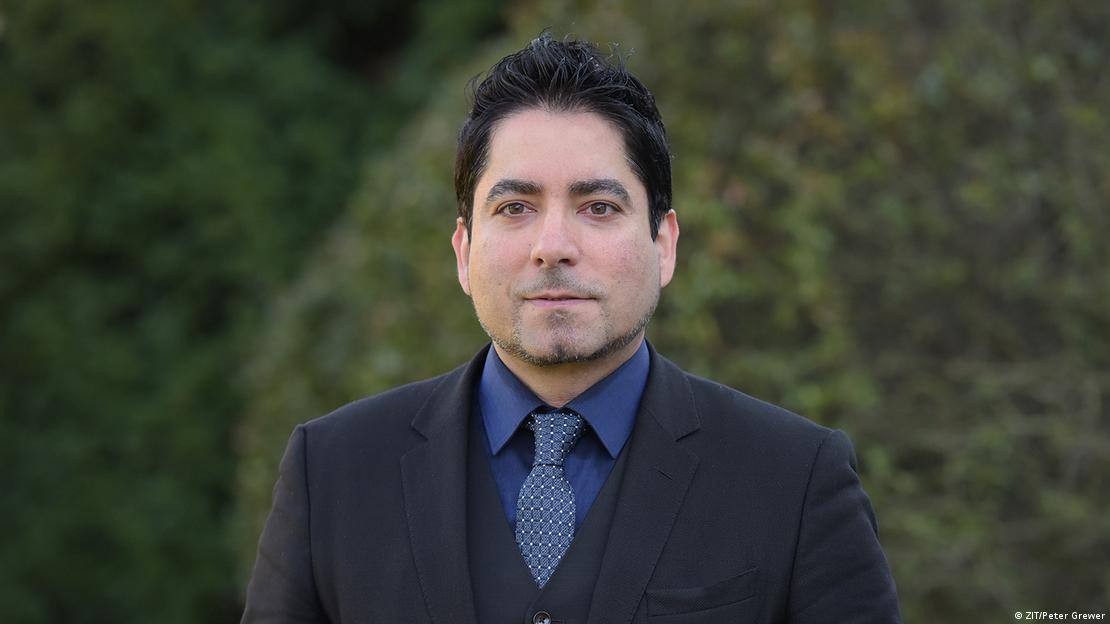
"I have the privilege of being part of a unique chapter in history," scholar Mouhanad Khorchide told DW. Looking back on 15 years of work at the University of Münster, he said the achievement fills him with deep gratitude. At the same time, the 54‑year‑old emphasized the responsibility that comes with it.

"We want to make the most of this unique opportunity and advocate for an open‑minded, enlightened understanding of Islam." According to Khorchide, the faculty's work will have an impact not only across Europe but also throughout the Muslim world.

Image
Mouhanad Khorchide is an Austrian sociologist and Islamic theologian and a Professor of Islamic Religious Education and Director of the Center for Islamic Theology at the University of Münster in Germany.Image: ZIT/Peter Grewer

Faculty status a significant milestone

As of July 1, a new chapter begins for Khorchide. For the time being, however, he will continue working from the temporary university offices near Münster's Paulus Cathedral. Until now, the sociologist and religious educator has led the Center for Islamic Theology (ZIT) at the University of Münster. He is now the founding dean — the first dean of the newly established Faculty of Islamic Theology.

The elevation to full faculty status gives Islamic theology a new standing within the university and represents a significant academic policy milestone. Until now, the ZIT lacked faculty status of its own and therefore depended on another faculty for important academic functions.


An increase in Islamic religious education

As an independent faculty, Islamic Theology can now confer doctorates and habilitations in its own right, helping to cultivate a new generation of scholars and establish a lasting academic legacy. The new status is also expected to make it easier to secure third‑party research funding.

Khorchide recalls the early days of the ZIT in 2012, when it had just 15 students and three staff members. Today, the center employs eight professors and more than 50 staff members, and Khorchide expects student numbers to exceed 500 in the coming years.

He expects a high demand. Across Germany, Islamic religious education is being introduced in public schools, creating a growing need for qualified teachers.

For example, in Germany's most populous state of North Rhine‑Westphalia where Münster is located, up to 3,000 teachers are required, but only around 330 are currently in place. For graduates, this offers a clear career path.

Video: Between worlds: Young Muslim women in Germany

12:34
'Islam and Social Work' specialization

Starting in 2027, Khorchide plans to launch a master's program titled "Islam and Social Work." He says there is strong demand for this specialization, particularly in fields such as youth services, hospital chaplaincy and elder care.

In its guiding principles, the faculty affirms the compatibility of faith and democracy, promotes a scholarly and contemporary reading of the Quran, and emphasizes interreligious dialogue. It also explicitly rejects extremism, antisemitism, and Islamism. "We oppose every form of religiously motivated violence and ideological manipulation," the document states.


Shaping Islam beyond Germany

Khorchide says he has been deeply impressed by the level of interest generated since news of the new faculty became public. Media outlets as far afield as Africa and Asia have reported on the development. He specifically points to Indonesia, the country with the world's largest Muslim population.

"People long for an open-minded Islam," Khorchide says. In the long term, he believes, Münster could help shape the broader debate on the future development of Islam far beyond Germany.

"Münster has traditionally been strong in theology," Norbert Robers, the university's spokesperson, told DW. Now, for the first time, the two Christian theological faculties and Islamic theology are being brought together under one roof, sharing a library and a cafeteria. "That has great symbolic power."

Europe's first Islamic theology department at a public university

A faculty of Islamic theology has long existed in Sarajevo, but it is not part of a public university structure. So Münster is now home to the first Faculty of Islamic Theology at a public university in Europe.

Robers, the university spokesperson, notes that the upgrade to faculty status may appear to be a "pure administrative act," but it carries significant legal and institutional weight. A ceremonial opening is scheduled for September 24 in the university's main hall.

Annette Schavan, a politician with the center-right Christian Democratic Union party (CDU) served as Germany's federal minister of education from 2005 to 2013. She played a key role in establishing Islamic theology at German universities and describes the current step as a "milestone." Writing on Cologne-based Catholic Domradio's portal in mid-June, she argued that the opening of the Faculty of Islamic Theology represented "a strengthening of academic theology as a whole" and predicted that the new faculty would be recognized across Europe.

This article has been translated from German.

https://www.dw.com/en/german-public-uni ... a-77801506
kmaherali
Posts: 24541
Joined: Thu Mar 27, 2003 3:01 pm

Re: ISLAM IN EUROPE

Post by kmaherali »

From colonial symbol to sanctuary: Paris's Grand Mosque turns 100

INTERVIEW
FRANCE
The Grand Mosque of Paris, built in 1926 in the Latin Quarter as a tribute to Muslim soldiers who died for France during World War I, marks its 100th anniversary this year. French historian Benjamin Stora traces its little-known role as a geopolitical bridge – not only between France and Algeria, but also between Muslims and Jews.

Issued on: 17/07/2026 - 17:57

7 minReading time

Share
By:
Assiya HAMZA

This file photo shows the Grand Mosque of Paris on October 19, 2022.
The Grand Mosque of Paris pictured on October 19, 2022. © Ludovic Marin, AP

Tucked away in the heart of the Latin Quarter neighbourhood, the Grand Mosque of Paris is one of the city’s essential landmarks. Inaugurated on July 15, 1926 by former French president Gaston Doumergue and Moulay Youssef, Morocco’s sultan at the time, the mosque was built as a tribute to the more than 100,000 Muslim soldiers who fought and died for France during World War I.

The Mosque's Hispano-Moorish architecture boasts a 33-metre-high minaret, courtyards and interior gardens inspired by Arab-Andalusian palaces and porticoes embellished with tiles hand-carved by Moroccan craftsmen in 1922. A jewel of Islamic architecture in France, the Grand Mosque of Paris has been listed as a historic monument since 1983.

This place of worship – now also a major tourist attraction – has evolved with history, as evidenced by the collaborative work published for the centenary: "La Grande Mosquée de Paris, Regards sur 100 ans en 100 événements" (The Great Mosque of Paris, Views on 100 years in 100 events). This book, edited by Mosque rector Chems-eddine Hafizn, offers photos and archival documents for a journey through time.


1/5

A craftsman works on the site of the Grand Mosque in Paris during the 1920s.

Image
A view of the courtyard in January 1950.

Image
A photo from 1938 shows Si Kaddour Benghabrit (3rd to the right), the mosque's first ever rector, standing beside the prince Seif El Islam El Hussein (2nd to the right) – the king of Yemen's third son

Image
The Dalai Lama stands beside Dalil Boubakeur (left), rector of the mosque, on December 5th, 1994.

Image
Former French president Jacques Chirac greets Muslim women at the mosque on April 9th, 2002.

Image
A craftsman works on the site of the mosque in Paris during the 1920s. © © AFP

The iconic house of worship hides a lesser-known history between its walls. Over the years, the mosque became a major geopolitical asset for France – first as a way to exert control over Muslims in France during the colonial era, then during the Algerian War and later as a safehouse for Jews being persecuted under German occupation.

French historian Benjamin Stora has spent his career studying Algeria and France's colonial past. While carrying out research on Algerian immigration and the relationship between Jewish and Muslim communities in France, he unearthed hidden truths about Paris's Grand Mosque.

FRANCE 24: What did the Algerian community in France first think of the plan to build the Grand Mosque in Paris?

Benjamin Stora: There were very few places of worship for Muslims in Paris after World War I, and the Grand Mosque took time to be built.

Opposition to the construction project began as early as 1922 and intensified upon its inauguration in 1926, a period that coincided with the founding of the North African Star ("Étoile Nord-Africaine" in French), the first Algerian pro-independence organisation led by Messali Hadj, who is often regarded as the father of Algerian nationalism. For the early Algerian nationalists, the mosque was seen as a tool through which the French authorities sought to counter the rise of Algerian nationalism.

Algerian immigrant workers in France were also wary of the institution, fearing it would be used to monitor, influence, or co-opt them. Over time, however, many gradually developed closer ties with the place of worship.

Did French authorities initially want to use the building to monitor Paris’s Muslim population?

At first, yes, of course. Around 100,000 Algerian workers of mostly Kabyle [a Berber ethnic group indigenous to the north of the country who mostly live in the Atlas mountains] origin arrived in France between 1919 and 1939. Many institutions were built as a way to monitor and control this population, including the Grand Mosque. There was also the Franco-Muslim Institute and the Franco-Muslim Hospital in Bobigny (a northeastern suburb of Paris). Surveillance was carried out by the North African Indigenous Affairs Department, built in 1925 and run by the Parisian police headquarters.

Because so much of the French colonial empire stretched across Muslim-majority countries, France had a lot of influence at the time. In the interwar period, the Grand Mosque was a way for France to exert that influence on the Muslim world. But it also let France project an image of tolerance toward Muslims and Islam. That ambivalence persisted throughout World War II and the Algerian War, which took place between 1954 and 1962.

Did surveillance intensify during the Algerian War?

Algerians were radically dispossessed of their land, which drove many peasants to leave the country. It’s impossible to understand Algerian immigration without addressing this fundamental fact, especially for those of Kabyle origin.

Once in France, Algerian immigrants were forced to weather widespread segregation and lived in slums throughout the 1950s.

//READ MORE
//French ‘counter-monument’ holds up a mirror to ghosts of colonial Algeria https://www.france24.com/en/france/2025 ... eria-nancy

Surveillance in France indeed intensified during the Algerian war. It was enforced through a whole range of social and charitable organisations. The Social Action Fund, for example, was founded in 1958 and aimed at providing housing for migrant workers living in slums, but it was also used to monitor them.

Were Muslims wary when they visited the Grand Mosque?

Yes, and it took time for that mistrust to ease. Before the Grand Mosque, Muslims in Paris often held Friday prayers in private places like cafés or hotels. The mosque was one of only a few places they could pray, and it was the only visible one. Over time, it drew in more and more worshippers, but it took nearly 40 years for it to become a well-known landmark.

Is it true that, under German occupation, the Grand Mosque was a safe haven for Jews?

French officials, judges and police officers collaborated from the beginning of the German occupation during World War II. There are photos of German army officials visiting the Grand Mosque, but they would often pose in front of institutions.

From around 1942 onwards, especially after the Vel’ d’Hiv roundup (a mass arrest of Jews in Paris by French Vichy police officers), the mosque’s rector Si Kaddour Benghabrit began issuing fake Muslim IDs to Jewish children. The Jewish-Algerian singer Salim Halali, whose real first name was Simon, also took shelter in the mosque during the Occupation.

Yet there are some critics who claim that never happened…

It’s a shame that there is controversy around this moment in the mosque’s history. There is irrefutable evidence, such as eyewitness accounts, and I myself gathered testimonials in 2010. It’s of course impossible to quantify just how many Jews were helped, but it definitely happened.

Some people are so bent on destroying any possibility of a friendly relationship between Jewish and Muslim communities that they want to erase this chapter in history. That erasure really saddens me.

Jews and Muslims lived together for 1,500 years. It wasn’t hell, nor was it paradise, but they did coexist. Maimonides, one of the most important Jewish scholars of the Middle Ages, wrote in Arabic. Jewish prayer books were written in Arabic. Now we are in the process of destroying all of that history. It’s important to try and preserve the places serving as bridges between religious communities.

The mosque has been repeatedly attacked by the right and far right in France. Why is this?

Since its construction, the Grand Mosque has been targeted by the far right. The very idea of building a mosque in Paris was hard to accept. The far right, nationalist and royalist political movement Action Française (French Action) wanted to block its inauguration. Violent campaigns and intense hostility from the far right persisted for years.

The mosque may be an undeniable part of France’s cultural and architectural heritage now, but it still gets caught in political crosshairs. Interior Minister Bruno Retailleau refused to attend the Iftar meal marking the end of Ramadan in 2025 following the imprisonment of writer Boualem Sansal in Algeria. And the mosque's current rector Chems-eddine Hafiz is constantly criticised, attacked and vilified. He faced accusations of opacity in how the mosque carried out an exclusive mandate – granted by Algeria in 2023 – to certify halal products across the EU. The attacks targeting him are in reality targeting Algeria.


There are also tensions between Algeria and Morocco around Paris's Grand Mosque. Algeria has been accused of taking control of the site.

Morocco's sultan may have initially headed the project, but Algeria gradually gained influence through its large population in France and the ripple effects its independence in 1962. Moroccans only began arriving in large numbers from the 1960s onwards. It’s just a matter of history.

This article has been translated from the original in French by Lara Bullens.

https://www.france24.com/en/france/2026 ... e9677ea768

Post Reply