Aga Khan's Global Centre for Pluralism

Any Institutional activities in the world
Post Reply
kmaherali
Posts: 23622
Joined: Thu Mar 27, 2003 3:01 pm

Post by kmaherali »

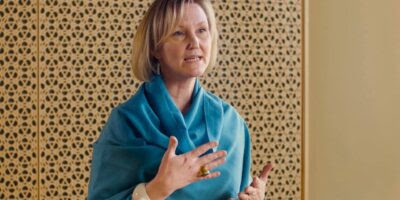
Beyond Recovery: Meredith Preston McGhie

Image

Video:

https://www.youtube.com/watch?v=bCRp982ipw0

Around the world, people are talking about recovery from the pandemic. How do we push beyond recovery to repair major fault lines and build an equitable future for all?

We’ve asked our network of pluralism champions around the world about what #BeyondRecovery​​ means in their communities. Here’s what Meredith Preston McGhie, Secretary General of the Global Centre for Pluralism had to say.

Learn more: www.pluralism.ca/beyond-recovery/.
kmaherali
Posts: 23622
Joined: Thu Mar 27, 2003 3:01 pm

Post by kmaherali »

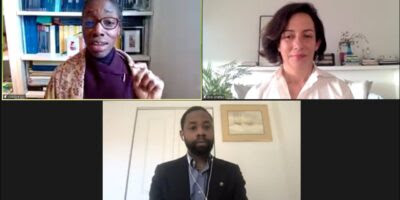
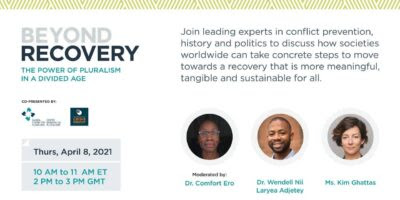
Beyond Recovery: A Panel Discussion

Image

Video:

https://www.youtube.com/watch?v=CJlNTru30lg

*********
Beyond Recovery : The Power of Pluralism in a Divided Age Highlights

Image

Video:

https://www.youtube.com/watch?v=2hj1tO9QOcY
kmaherali
Posts: 23622
Joined: Thu Mar 27, 2003 3:01 pm

Post by kmaherali »

Google translation of the original article in Portuguese:

https://the.ismaili/portugal/ser-ou-n%C ... faz-sentir

To be or not to be ... included. Have you ever thought about how it makes you feel?

Image

The words "pluralism" and "inclusion" are on the agenda. Mawlana Hazar Imam considers this theme so fundamental for society, that it created an institution totally dedicated to pluralism. But why?

During his visit to Portugal, on the occasion of the Golden Jubilee celebrations, Mawlana Hazar Imam spoke to the members of the Portuguese Parliament. When talking about global change and growth he said:

“What will these new realities mean to us? On the one hand, we have to realistically recognize that our interconnected world can cause a growing feeling of distrust, fear and perhaps even disorientation, when looking to the future. Unfortunately, different peoples can sometimes interpret their differences as threats and not as opportunities, defining their own identity by what they reject and not by what they defend ”.

When you think of Pluralism and Cultural Diversity, what comes to mind? Do you feel them as a threat or an opportunity?

When someone introduces himself, is the person identified by what he defends or what he rejects?

Mawlana Hazar Imam also said on that occasion:

“… On the other hand, greater closeness to interactions in our world will also produce new and wonderful opportunities for creative cooperation, healthy interdependence, new discoveries and inspiring growth. When that happens, the opportunity to get involved with people who are different from us does not have to be seen as a burden, but as a blessing ... ”.

How can the difference be a blessing? Can we learn from someone who is different from us? Can we become more empathetic and open when we know "the other" and allow ourselves to make it known? Do we become stronger when we expand our circle and embrace new cultures?

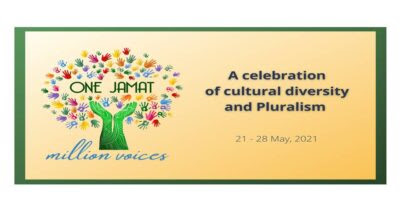
These issues, and many others, will be addressed in the week of Pluralism and Cultural Diversity, from 21st to 28th of May.

Throughout the week, you will be able to hear testimonies in the first person, get to know a little more about the different cultures that we have within our Jamat, and you will also be able to count on two essential programs, which will be shown on Ismaili TV, with special guests. !

Stay tuned to Whatsapp and social networks!
Admin
Posts: 6531
Joined: Mon Jan 06, 2003 10:37 am
Contact:

Princess Zahra Aga Khan address the GCP on 19th May 2021

Post by Admin »

https://the.ismaili/global/news/institu ... lly-19-may

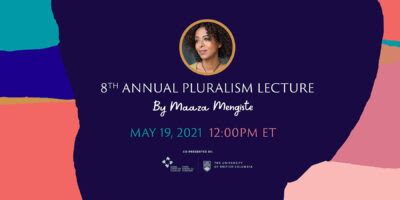
This year’s Annual Pluralism Lecture, presented by the Global Centre for Pluralism in partnership with the University of British Columbia, will be livestreamed on 19 May, and will feature opening remarks by Princess Zahra Aga.

The 8th Annual Pluralism Lecture, entitled “The Moment of Encounter: History, Disruptions, and Transformations” will be delivered by Ethiopian-American novelist Maaza Mengiste from New York’s Center for Fiction.

Ms Mengiste will speak about her journey into historical research while writing her critically acclaimed novel, The Shadow King, which was a finalist for the 2020 Booker Prize. She will discuss the surprising and revelatory discoveries she made about collective memory and official archives, and what history can teach us about the future.

In her opening remarks, Princess Zahra, who is a Global Centre for Pluralism Board Member, will reflect on how the pandemic has created an urgency for conversations and actions centered on building respect, empathy, and a more equitable, just, and prosperous future for all.

Following the lecture, Ms Nahlah Ayed, host and producer of CBC Ideas, will engage in a conversation with Ms Mengiste to discuss some of the lecture’s themes.

The Global Centre for Pluralism is an independent, charitable organization founded by Mawlana Hazar Imam and the Government of Canada. The Centre works with policy leaders, educators, and community builders around the world to amplify and implement the transformative power of pluralism.

The lecture will be webcast live on The Ismaili TV on 19 May at 12 PM (Toronto), 5 PM (London), and 8 PM (Dubai), and will replay on The Ismaili TV in the days after the event.
Last edited by Admin on Wed May 19, 2021 9:31 pm, edited 1 time in total.
Admin
Posts: 6531
Joined: Mon Jan 06, 2003 10:37 am
Contact:

Post by Admin »

http://facebook.com/GlobalPluralism

In partnership with the Global Centre for Pluralism, this event will connect a small group of UBC students with Maaza Mengiste to discuss creative solutions to real-world problems.

Join us on May 18 at 12:30 p.m. https://bit.ly/2RaV936

May 18, 2021

Vancouver Time 12:30 p.m. – 1:30 p.m PT

Presented in partnership with the Global Centre for Pluralism

To register: https://ubc.ca1.qualtrics.com/jfe/form/ ... v4XK5LnYeq


The 2021 Global Centre for Pluralism's annual lecture entitled _"The Moment of Encounter: History, Disruptions, and Transformations"_ will be delivered in partnership with the University of British Columbia. Ethiopian novelist and 2020 Booker Prize finalist, *Maaza Mengiste* will deliver the the lecture on m *Wednesday, May 19* from New York’s Center for Fiction, followed by a conversation with Nahlah Ayed, host of CBC Radio’s Ideas.

In the lecture, Ms. Mengiste will talk about her journey into historical research while writing her critically acclaimed novel, _The Shadow King_. She will discuss the surprising and revelatory discoveries she made about collective memory and official archives, and what history can teach us about the future.

_*Princess Zahra*_, who is a Global Centre for Pluralism Board Member, will in her opening remarks, reflect on how the pandemic has created an urgency for conversations and actions centered on building respect, empathy, and a more equitable, just, and prosperous future for all.

Join the livestream on *Wednesday, May 19 at 12pm ET - Toronto time* by clicking here - Connect to the livestream on May 19 at 12 PM ET here:

*Facebook* :

facebook.com/GlobalPluralism

*Youtube* :

https://youtube.com/channel/UCr7cUTa9eHWUwVvKy-r1xqg

and

https://www.youtube.com/watch?v=I5ztss4ojTY

These link should be opened by copy-paste of the URL in your browser.

The mission of the Global Centre for Pluralism is to influence perspectives, inform policies and inspire pathways to advance pluralism. Read more - https://www.pluralism.ca/event/maaza-me ... m-lecture/
kmaherali
Posts: 23622
Joined: Thu Mar 27, 2003 3:01 pm

Post by kmaherali »

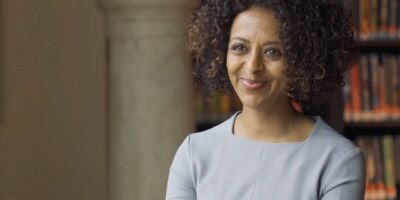
Maaza Mengiste delivers 8th Annual Pluralism Lecture

Image

Ethiopian-American novelist Maaza Mengiste delivered the Global Centre for Pluralism’s eighth Annual Pluralism Lecture today, 19 May, following opening remarks by Princess Zahra. The lecture, entitled “The Moment of Encounter: History, Disruptions, and Transformations” was held virtually, in partnership with the University of British Columbia.

In her opening address, Global Centre for Pluralism (GCP) board member Princess Zahra reflected on how the Covid-19 pandemic has created an urgency for conversations and actions centered on building respect, empathy, and a more equitable, just, and prosperous future for all.

“The pandemic, and the inequalities that it has magnified, are a stark reminder of the urgency with which we must come together across our differences to build a more inclusive society,” Princess Zahra said.

“Engaging with one another to build mutual understanding and appreciation across our differences – the kind of dialogue which is at the heart of pluralism – must continue. There are important lessons to be learned from the past year as the pandemic has transformed our societies and our institutions. Our ability to work remotely has shown new approaches to reducing our climate footprint and, for example, brought education to remote communities. These and other positive outcomes have the potential to strengthen our ambition for greater equity in and across our societies.”

The GCP’s annual lecture series features leaders in pluralism, who are making a difference in their chosen fields. Maaza Mengiste is a critically acclaimed novelist and essayist whose work examines the individual lives at stake during migration, war, and exile. Her award-winning novels include Beneath the Lion’s Gaze and The Shadow King.

While introducing Ms Mengiste, Princess Zahra acknowledged the writer’s ability to bridge divides by writing about the struggles and lives of individuals and communities.

“How we talk about history — at school, at home, and through literature — is a powerful part of how we create a sense of belonging and shared destiny as a society. Ms Mengiste’s work reminds us of the hidden stories and voices that we must seek to amplify,” Princess Zahra said.

“Her writing considers how historical narratives and collective memory are shaped over time. History and memory are central to pluralism. We see this in many countries where education is critical to building a pluralistic society.”

Meredith Preston McGhie, Secretary General of the Global Centre for Pluralism, gave additional opening remarks that reemphasized the link between Ms Mengiste’s lecture and the Centre’s mandate.

“The work we do at the Centre focuses on these actions and decisions needed to advance both better structural and cultural responses to diversity,” Ms Preston McGhie said. “This Annual Pluralism Lecture is one such initiative. It provides us an opportunity to learn from distinguished speakers like Ms Mengiste, whose writing tackles issues at the very heart of pluralism — collective memory, historical narratives, belonging, and identity."

Ms Mengiste’s lecture began with the story of a photograph: two men standing side by side, inches apart from one another. One is East African, off to the side, wearing old and torn clothing on his slender frame, shoeless. The other is Italian, centred in the photo with a relaxed expression on his face and well-fitting clothes adorning his powerfully-built frame. Ms Mengiste said she spent many hours examining this photo, sensing that it was trying to tell her something.

She described Benito Mussolini’s fascist intention to colonise Ethiopia in 1935, joining other European colonial powers staking a claim on the African continent, and the propaganda effort involved.

“One of the first steps towards invasion and war involved photographs, a visual narrative to establish a definition of Ethiopians as uncivilized, backwards in every sense, and lacking in all imaginative capacities,” Ms Mengiste said. “The photographs sent back to Italy through the press portrayed the stark differences between East Africans and Italians. Those pictures highlighted the exotic and unusual — the seemingly unbridgeable gaps that existed between two vastly dissimilar groups of people. By the time the invasion happened and war broke out, it was clear to Italians that Ethiopia needed the benevolent hand of Italy. This would be a civilizing mission.”

Before engaging in a conversation with Nahlah Ayed, host and producer of CBC Ideas to discuss some of the lecture’s themes, Ms Mengiste went on to recount the Italian invasion of Ethiopia, offering it as an example of what history can teach us about the future. As an example of the relationship between visible and hidden, power and subjugation, men and women. Between west and east, caucasian and African, known and unknown.

“We have been taught for so long that an answer must always follow a question — that if we cannot point to a resolution then we have failed. But what if, in that space between knowing and confusion, is an entire landscape where something else beyond answers but equally vital exists?” Ms Mengiste asked, hinting at the steps towards tangible progress.

“What if, cradled within each moment of encounter, is a force that can lead us towards real transformation? What if to be disturbed is just one step towards that journey? What if every step forward takes us not into the territory of comfort and certainty, but towards new disruptions and greater leaps?”

In his closing remarks, President and Vice-Chancellor of the University of British Columbia Santa Ono concluded by acknowledging that understanding our shared history can “advance or erode efforts at building thriving societies that value diversity. An inclusive approach to history is, therefore, integral to pluralism.”

“An important application of striving for a better world is to unpack and carefully consider the difficult, sometimes painful, lessons from our past. By learning from those mistakes, and addressing them with tangible solutions that can benefit all, we can move forward towards more pluralistic societies, together,” Mr Ono said. “Thank you, Maaza Mengiste, for giving us the opportunity to hear your boundless wisdom today and leaving us with plenty to discuss.”

Photos at:

https://the.ismaili/global/news/institu ... sm-lecture
kmaherali
Posts: 23622
Joined: Thu Mar 27, 2003 3:01 pm

Post by kmaherali »

Global Centre for Pluralism’s Annual Lecture delivered by Ethiopian Novelist Maaza Mengiste

Image

Ottawa, Canada, 19 May 2021 – Award-winning author of The Shadow King, Maaza Mengiste, delivered the 8th Annual Pluralism Lecture today. Maaza Mengiste is a critically acclaimed novelist and essayist whose work examines the individual lives at stake during migration, war, and exile. She was born in Addis Ababa, Ethiopia, and lived in Nigeria and Kenya before moving to the United States. Mengiste’s debut novel, Beneath the Lion’s Gaze (2010), was named one of The Guardian’s Ten Best Contemporary African Books. Her latest novel, The Shadow King (2019), was called “one of the most beautiful novels of the year” by National Public Radio. It was a Booker Prize finalist in 2020.

Meredith Preston McGhie, Secretary General of the Global Centre for Pluralism, remarked, “We are thrilled to have Maaza Mengiste deliver this year’s Annual Pluralism Lecture. Her writing tackles issues at the very heart of pluralism – collective memory, historical narratives and identity — and offers us the opportunity to learn about how to build and strengthen societies where everyone belongs .... This is so critically important. Literature can help us see past the polarisation and politicisation of these issues, to bring us to a more constructive place.”

The Annual Pluralism Lecture series presents an opportunity to learn from extraordinary individuals whose work exemplifies pluralism in action. Past lecturers have included South African freedom fighter Justice Albie Sachs; then Chief Justice of Canada Beverley McLachlin; and current UN Secretary-General António Guterres, among others.

Princess Zahra Aga Khan, a board member of the Global Centre for Pluralism, introduced the lecture. “The pandemic, and the inequalities it has surfaced, are a stark reminder of the urgency with which we must come together across our differences to build a more inclusive recovery,” she said. “We see the emotional and social toll that conflict can take, mirrored today in so many societies, from Syria and Yemen to Myanmar.”

Dr. Santa J. Ono, President and Vice-Chancellor of the University of British Columbia, said, “In striving for a better world, it is essential to unpack and carefully consider the difficult, sometimes painful, lessons from our past. By learning from those mistakes, and addressing them with tangible solutions that benefit all, we can move forward towards more pluralistic societies, together.”

More information about the event is available here: https://www.pluralism.ca/event/maaza-me ... m-lecture/

https://www.akdn.org/press-release/glob ... a-mengiste
kmaherali
Posts: 23622
Joined: Thu Mar 27, 2003 3:01 pm

Post by kmaherali »

8th Annual Pluralism Lecture with Maaza Mengiste, author of "The Shadow King"

Video:

https://www.youtube.com/watch?v=I5ztss4ojTY

Join the Global Centre for Pluralism and the University of British Columbia for a livestream of the 2021 Annual Pluralism Lecture.
Ethiopian novelist and 2020 Booker Prize finalist, Maaza Mengiste, will deliver the 8th Annual Pluralism Lecture, “The Moment of Encounter: History, Disruptions, and Transformations” on May 19, 2021 from New York’s Center for Fiction, followed by a conversation with Nahlah Ayed, host of CBC Radio’s Ideas.
Maaza Mengiste will talk about her journey into historical research while writing her critically acclaimed novel, The Shadow King. She will discuss the surprising and revelatory discoveries she made about collective memory and official archives, and what history can teach us about the future.
Biography:
Born in Addis Ababa, Ethiopia, Maaza Mengiste is a critically acclaimed novelist and essayist whose work examines the individual lives at stake during migration, war, and exile. Mengiste’s debut novel, Beneath the Lion’s Gaze (2010), was named one of The Guardian’s Ten Best Contemporary African Books. Her latest novel, The Shadow King (2019), was called “one of the most beautiful novels of the year” by NPR and was a 2020 Booker Prize finalist. The winner of the 2020 Literature Award from the American Academy of Arts and Letters, Mengiste’s honours include the Creative Capital Award, a Fulbright Scholarship, and fellowships from the National Endowment for the Arts and Puterbaugh Festival of International Literature & Culture.
Related events:
Maaza Mengiste will also be discussing her book, The Shadow King at a #UBCConnects Masterclass on May 18, 2021. For more information and to register, visit: events.ubc.ca/maaza-mengiste/
..................................................................
Joignez-vous au Centre mondial du pluralisme et à l’Université de la Colombie-Britannique lors de la diffusion en direct de la Conférence annuelle sur le pluralisme 2021.
La romancière éthiopienne et finaliste du Booker Prize 2020, Maaza Mengiste, prononcera la 8e Conférence annuelle sur le pluralisme intitulée « Le moment de la rencontre : histoire, perturbations et transformations » le 19 mai 2021 en direct du Center for Fiction de New York. Elle s’entretiendra ensuite avec Nahlah Ayed, animatrice de l’émission Ideas, sur CBC Radio.
Maaza Mengiste parlera du parcours de recherche historique qu’elle a entrepris pour son roman acclamé par la critique, The Shadow King. Elle abordera les découvertes surprenantes et révélatrices qu’elle a faites sur la mémoire collective et les archives officielles, et ce que l’histoire peut nous enseigner sur l’avenir.
Biographie :
Née à Addis-Abeba, en Éthiopie, Maaza Mengiste est une romancière et essayiste acclamée par la critique. Son travail se penche sur les vies individuelles en jeu lors de migrations, de guerres et d’exils. Le premier roman de Mengiste, Sous le regard du lion (2010), fait partie des dix meilleurs livres africains contemporains selon The Guardian. Son plus récent roman, The Shadow King (2019), est considéré comme « un des plus beaux romans de l’année » par NPR et a figuré en finale du Booker Prize en 2020. Lauréate du Prix littéraire de l’Académie américaine des arts et des lettres, les Prix et distinctions de Mengiste comprennent notamment le Creative Capital Award, une bourse Fulbright et des bourses de recherche du National Endowment for the Arts et du Puterbaugh Festival of International Literature & Culture.
Événement connexe :
Maaza Mengiste parlera de son livre The Shadow King à la classe de maître #UBCConnects le 18 mai 2021. Pour de plus amples informations à ce sujet, visitez le www.events.ubc.ca/maaza-mengiste/.
kmaherali
Posts: 23622
Joined: Thu Mar 27, 2003 3:01 pm

Post by kmaherali »

A Special Message from Aga Khan Council for Canada President Ameerally Kassim-Lakha

Video:

https://www.facebook.com/TheIsmailiOnta ... 603036632/

In this special message to the Jamat, Aga Khan Council for Canada President Ameerally Kassim-Lakha offers a message of condolence and support in light of recent tragic events in Canada.
kmaherali
Posts: 23622
Joined: Thu Mar 27, 2003 3:01 pm

Post by kmaherali »

The attack in London did not occur in a vacuum. It is a reflection of my city – and of Canada

They were killed within walking distance of where I live. A Muslim family, out for an evening stroll.

I walk the same path they took, pray at the mosque where they prayed and even attended the same high school as the daughter. These faces I have seen as I grew up in this community – gone.

Heartbroken? Yes. Shocked? No.

London is my home. But hate, racism and Islamophobia have a deep history here. The Ku Klux Klan established a presence in London in 1872, sowing their hate within the fabric of our city. Fast forward to 2017, when an anti-Islam protest was initiated in this city by the Patriots of Canada Against the Islamization of the West (PEGIDA); roughly 40 members and supporters attended. London has been and still is a hot spot for right-wing extremism, Islamophobia and white supremacist activity.

Growing up in northwest London, my family was one of the few visible Muslims in our neighbourhood. Our home and car were targeted and vandalized monthly. Each time we would just wash off the yolk and clear away the shells, but the stench and fear remained. My parents were always putting on a brave face for their children, playing it down by telling us that it must just be some mischievous kids on the block. After reporting this to the police a few times we gave up, as nothing came of it. But I knew it worried them. They never wanted me to travel alone, especially at night. We had conversations about how the way I looked made me a target, how I needed to be more careful than other kids.

Years before Yumna Afzaal walked the halls of Oakridge Secondary School, my friends and I faced severe opposition from parents – and even some staff – who didn’t want us to create a safe space for Muslim students to practise their faith. This is my London, my Canada.

If we deny that we have a problem, then we will never address the root cause. This is not a lone attack or an incident that occurred in a vacuum. It is a reflection of our city and our country as a whole. Nor are Islamophobia, Indigenous rights, anti-Black racism and antisemitism separate problems. They are all a part of structures created from a colonial past. One that has benefitted from divide-and-conquer policies and depended on “othering” those who are different.

If Canada calls itself a mosaic, then that mosaic is under attack by those who want to destroy it with our blood.

Yet, there is always hope. Thousands attended the vigil at the London Muslim Mosque on Tuesday. People from all walks of life came out to show solidarity to the Muslim community – strangers assuring us, “we are with you, you are loved.”

Just as it took the support of one teacher to stand up as an ally and support the Muslim students at Oakridge Secondary School when I attended all those years ago, what this community needs right now is you. Every Londoner, every Canadian, needs to be an ally. Stand up against the overt aggression but also, perhaps more importantly, against the microaggressions and other forms of racism you have ignored for far too long in your daily lives. Do you speak or act differently when the person looks different than you? Do you politely ignore the racist, Islamophobic, antisemitic, anti-Asian or anti-Indigenous comments you hear from your colleagues, your extended family, your political party? Letting those seemingly big and little things go has brought us here, to this.

I have to commend Jeff Bennett, a former Progressive Conservative Party candidate for London West, for calling it out as it is. “We must take stock of the part we play,” he wrote in a widely shared Facebook post. “No more saying, ‘Oh grandpa is not really racist. He was just raised differently.’ Well that ‘differently’ is not okay. Canada has a racist, unacceptable history. It’s time we call it out, own it and take action.”

Every Indigenous issue is our issue. Every anti-Asian hate crime, every Islamophobic attack, should be seen as a crime against all of us. Every Black life lost senselessly is interconnected. Our colonial past is still affecting us in our everyday lives, making it easier for some to live, while others continue to suffer.

I hope my neighbours in London choose to stand up in solidarity and take action. I hope you all do.

https://www.theglobeandmail.com/opinion ... ection-of/
kmaherali
Posts: 23622
Joined: Thu Mar 27, 2003 3:01 pm

Post by kmaherali »

Video Quote: Why GCP was Established in Canada

Image

Video:

https://www.youtube.com/watch?v=7oHTSy5c2PY
kmaherali
Posts: 23622
Joined: Thu Mar 27, 2003 3:01 pm

Re: Aga Khan's Global Centre for Pluralism

Post by kmaherali »

Global Centre for Pluralism Announces 2025 Global Pluralism Award Finalists

Image

Ten extraordinary organizations from around the world recognized for their work to build more inclusive societies where diversity is valued.

OTTAWA, CANADA, Sept. 25, 2025 – The Global Centre for Pluralism announces today the ten laureates for the 2025 Global Pluralism Award. These leaders are being recognized for their exceptional and courageous work to support full participation by marginalized groups in their societies, build trust and cooperation between warring parties, and create systems that foster the protection and celebration of differences around the world.  

Selected from over 300 applications across 64 countries, the 2025 finalists are operating in some of the world’s most challenging contexts. From active war zones to communities facing extreme discrimination, they champion a more peaceful and equitable world and provide examples of how it is possible to make practical changes that foster pluralistic societies.

The 2025 Global Pluralism Award finalists are:

A Land for All (Israel and Palestine) https://award.pluralism.ca/laureate/a-land-for-all/ : An Israeli-Palestinian movement promoting a visionary future where two states exist within a shared homeland, prioritizing reconciliation and a shared belonging despite current polarization.

Artistic Freedom Initiative (USA/Switzerland) https://award.pluralism.ca/laureate/art ... nitiative/ : Provides critical legal and resettlement services to persecuted artists from over 60 countries, preserving cultural memories, languages and identities despite repression in their home countries.

Cesta von (Slovakia) https://award.pluralism.ca/laureate/cesta-von/ : Empowers the Roma community to find a way out of systemic poverty to participate more fully in their broader society.

Colombia Diversa (Colombia) https://award.pluralism.ca/laureate/colombia-diversa/ : Advances justice and inclusion for LGBTIQ+ people through strategic litigation and unprecedented dialogue with oppositional groups, including evangelical leaders and former combatants.

Coordinadora Nacional de Mujeres Indígenas (CONAMI) (Mexico) https://award.pluralism.ca/laureate/conami/ : A network of Indigenous women increasing indigenous women’s participation in decision-making in Mexico and tackling gender-based violence and land rights by centering traditional knowledge in national activism.

Mais Diferenças (Brazil) https://award.pluralism.ca/laureate/mais-diferencas/ : Unites Brazilians with and without disabilities to co-create tools that enable all students to experience meaningful learning together.

New Life Trust Organization (Afghanistan) https://award.pluralism.ca/laureate/new ... anization/ : Fosters women’s entrepreneurship and inter-ethnic solidarity through skills training and artistic expression in one of the world’s most challenging contexts for gender equality.

Nonviolent Peaceforce (International) https://award.pluralism.ca/laureate/non ... eaceforce/ : Undertakes peacebuilding activities that build trust among all parties to conflict in countries from Ukraine to South Sudan, centering the voices of those on the peripheries to participate in building solutions.

Southern Africa Litigation Centre (Regional) https://award.pluralism.ca/laureate/sou ... on-centre/ : Supports marginalized populations across 12 African countries through landmark litigation to overcome systemic barriers to full legal, social, and environmental participation.

Sudanese Youth Network for Ending the War and Establishing a Democratic Civil Transformation (Regional) https://award.pluralism.ca/laureate/sud ... h-network/ : Unites diverse Sudanese youth within Sudan and across 6 other countries around a common vision to end the war and transition to a civilian government.

“The Global Pluralism Award seeks out the world’s most powerful examples of pluralism in action. This year, we are proud to welcome ten new exemplary leaders into our now 50 strong community of award alumni,” said Meredith Preston McGhie, Secretary-General of the Global Centre for Pluralism. “This is more than a network; it is a dynamic and growing global community of practice with lessons for all of us. These leaders are on the front lines and provide vital lessons about what is possible around the world. Together, they prove that pluralism is not just an ideal, but a practical solution to the world’s most pressing challenges.”

Dr. Marwan Muasher, chair of the Global Pluralism Award jury points out that the Award plays a role in building solidarity. “People who work on pluralism need to be recognized and acknowledged around the globe; the Award does a lot in raising awareness about the need for pluralism. It is important for this global community of practitioners to know about each other and their successes in different contexts.”

ABOUT THE GLOBAL PLURALISM AWARD

The Global Pluralism Award recognizes pluralism in action. Presented every other year to individuals, organisations, governments and businesses from around the world, the Award celebrates the inspiring and brave work that is helping to build more inclusive societies where diversity is valued and protected.  

The Award is conferred by the Global Centre for Pluralism, an independent, charitable organization founded by Prince Karim al-Hussaini Aga Khan IV and the Government of Canada, and is made possible in part by the generous support of TD Bank Group.


FOR MEDIA INQUIRIES, PLEASE CONTACT:

Laís Maurilio

Manager, Communications and Public Affairs, Global Centre for Pluralism

+1-613-668-3785

media@pluralism.ca

https://award.pluralism.ca/global-centr ... finalists/
Admin
Posts: 6531
Joined: Mon Jan 06, 2003 10:37 am
Contact:

Aga Khan's Global Centre for Pluralism Award 2025-11-15

Post by Admin »

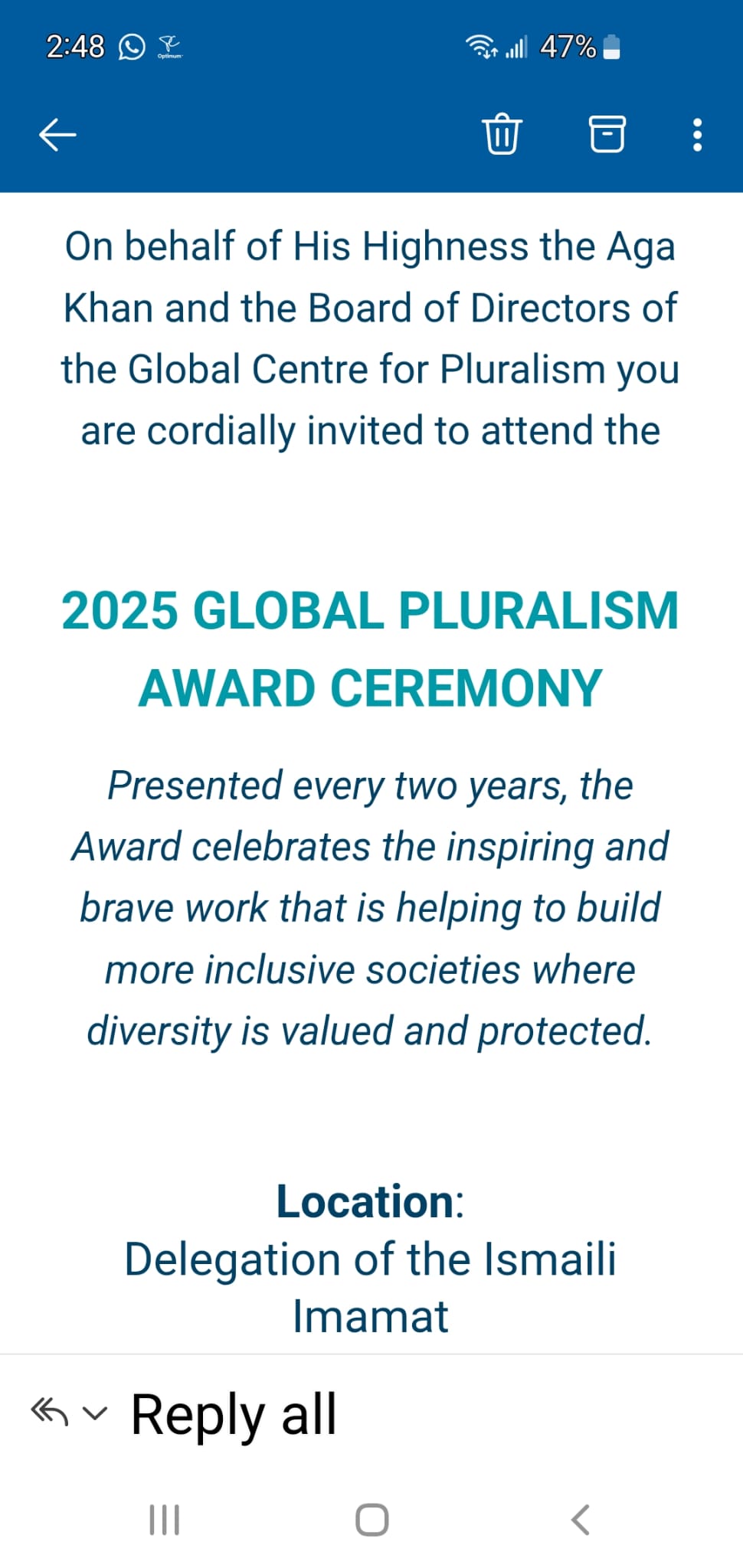
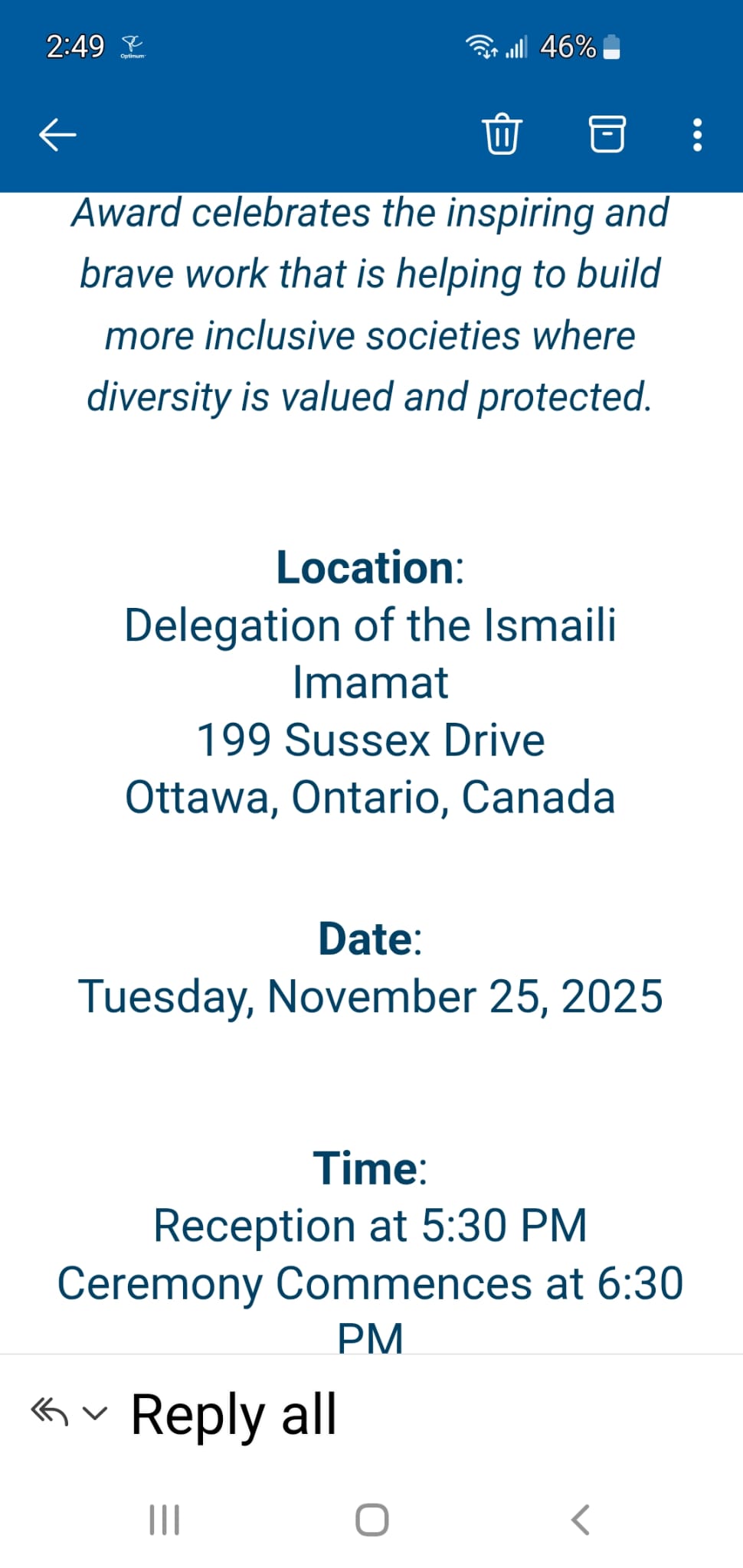
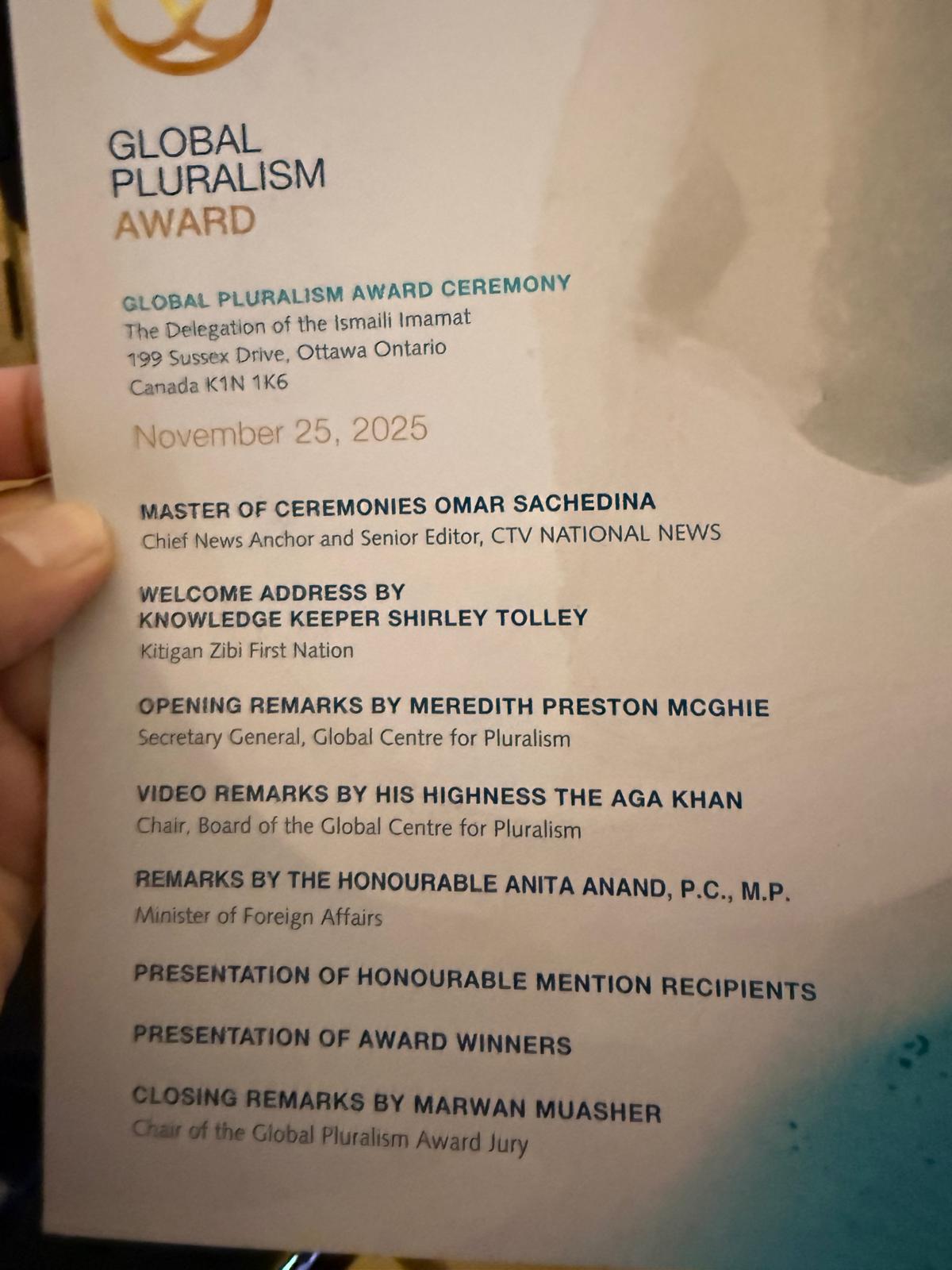
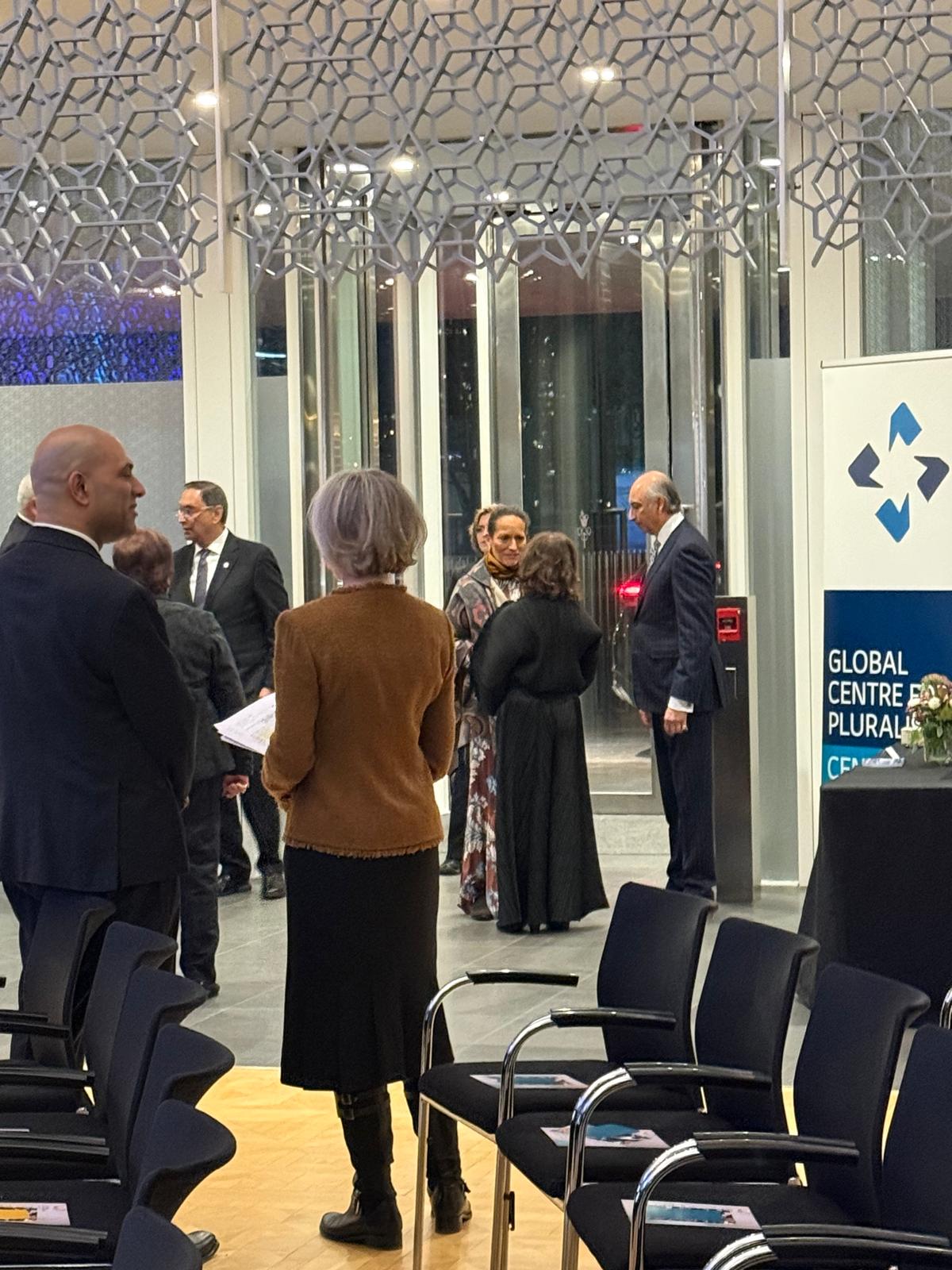
2025, November 25: Award ceremony of the GCP at Delegation of the Ismaili Imamate in Ottawa and invitation by H.H. The Aga Khan V.[/b]

Image

Image
kmaherali
Posts: 23622
Joined: Thu Mar 27, 2003 3:01 pm

Re: Aga Khan's Global Centre for Pluralism

Post by kmaherali »

A conversation with Meredith Preston McGhie, Secretary General of the Global Centre for Pluralism

Image

By Nazim Karim
Our interview with Meredith Preston McGhie addresses a range of topics, from the meaning of pluralism to its application in reducing conflicts, changing perceptions of the “other,” and to the work of the Global Centre for Pluralism. The Global Pluralism Award will be conferred this year – the 5th time the prize has been given.

The winners were recently announced, with an award ceremony to take place this November. At a time of growing anxiety, the laureates are phenomenal examples of action toward a better future – building bridges and overcoming division to re-centre positive humanity in some of the world's toughest places. Follow the Global Centre for Pluralism for the latest news on the Award.

Thank you for taking the time to discuss a topic of great urgency in today's world. Perhaps we should begin with an explanation of the distinctions between three related concepts that are used interchangeably but which have different meanings: tolerance, diversity, and pluralism?

These concepts are indeed connected, and we often see confusion so I am happy to start by clarifying it. Diversity is a fact. It exists in all societies. We are diverse ethnically, linguistically, in terms of our faith, our geography, political persuasion, race, gender, and so forth. These diversities exist in different forms in every community, every society around the world.

Pluralism is the set of actions we take to see diversity as a strength to be harnessed to make society better. Each society will have a different path towards pluralism, but the ultimate goal for pluralism is to see diversity as a strength for our collective success. That is the sort of ethic for respect for diversity that His Late Highness so often talked about.

A pluralist society is a long-term aspiration that helps us to frame each decision we take (as governments, institutions, individuals) around how we can all work towards fostering belonging – the dignity and respect of each individual and group in a society.

Therefore, the idea of belonging is equally important to pluralism. It is important to reflect on what it means to belong. To intrinsically feel part of a society, that others see you as part of it, and respect you in your fullest form, and that you can fully participate in the direction of that society.

What is critical about this is that my belonging does not come at the expense of yours, that these things are and must be mutually reinforcing and connected. This is foundational to the development of peaceful, prosperous and just societies and is at the core of pluralism.

Tolerance and social cohesion are important concepts and significant steps on a society’s path to pluralism. When you think about tolerating difference however, you do not think about what I just described – tolerance only gets you part of the way to this more transformative path of pluralism. We embrace approaches to tolerance and use this as an important marker as we talk about other pluralism foundational concepts.

The UN Declaration of Human Rights lists 30 basic rights, such as respect for life, religion, dignity, freedom of expression and so on. But different societies and traditions interpret and prioritize these rights differently. What are Canadian values? Does someone from another country arriving in Canada have to change certain concepts to be able to be Canadian or accepted as fully Canadian? There will always be a retained aspect of cultural tradition and identity, so is there an inevitable conflict here? And how does one resolve that?

There are many ways to try to resolve these tensions – there is not an easy or single answer. One of the questions that I would pose back, if I was in conversation with someone, is to understand what we mean by “values.” Often, when one has a dialogue with different communities about what their values are, there is more in common than many might expect to find. The expression of those values may look different. What concerns me is when statements come from a place of fear rather than a genuine conversation about what our values are and how they connect us.

Too often in our current climate, with social media, we see our identities as fixed and not evolving or adapting. I am also conscious that for some it feels like things are evolving and changing too fast. That is where these reactions often stem from. It is important to find ways of leaning in and having civil discourse around where those values are, in fact, connected.

As an example, we convened a discussion with a Jewish professor of political science in Canada, and a Palestinian law professor in California who work together, trying to understand Israel and Palestine from both of their perspectives, which as you can imagine right now is probably one of the hardest things to do anywhere in the world. I asked them how they do this. And they said, even when they deeply disagree, and even when one has hurt the other in the way that they expressed something, they go back to core shared values. And those values are quite human. Those values are for a peaceful future for the region, for belonging. I do think that when we all go back to those basics, we can find common ground.

Image

Princess Zahra and Ms McGhie congratulate Esther Omam, a peacebuilder from Cameroon and one of three winners of the 2023 Global Pluralism Award.
Photo: Patrick Doyle


While leaders seem to be talking a lot about pluralism, we've seen a continuation of conflicts. There are conflicts in Ukraine, Myanmar, Gaza, Sudan - the list goes on. So, many governments and leaders seem to espouse the notion of pluralism but are not actually practicing it, and the world is not a safer place for many people.

I would like to note that you are talking about political leaders, but it is important that we broaden our notion of leadership. His Late Highness was an example of a leader who expressed a vision that is much deeper and broader. We need to look to a wider range of leaders. We live in a world where conflict is on the rise and many of these have re-emerged because of negligence in addressing core questions of how to engage with diversity. In surveys across Sudan, even in the depths of conflict right now, people point to the failure of building a genuinely inclusive political system as a contributor to the conflict.

So, this failure of pluralist leadership that contributes to these conflicts needs to be addressed. Some politicians I have spoken to remark that their own systems incentivize them to take divisive positions rather than try to draw people into a civil conversation. We increasingly see systems where bases are being mobilized, rather than leaders leaning into the middle ground. We need to come back to engage in what is a large, but often a more silent, middle ground.

That said, much of our work on peace and conflict gives me a sense of optimism in the midst of incredibly difficult, intractable conflicts, because people are talking much more directly about the centrality of pluralism in peace processes than they were 20 years ago. Because they recognize at a deeper level that it is the core failing that they need to address to sustainably resolve conflicts in places like Sudan and Myanmar and elsewhere.

We are seeing increasing divisions within society about all manner of issues, whether it's abortion, the roles of church and state, and, of course, immigration. We are seeing more and more extreme positions and opinions, which political leaders are adopting just to win. Does this present a pessimistic view for the future about the pluralistic vision that we have?

It is indeed a challenge. One of the factors that we have to contend with now is the social media landscape and algorithms prioritize more hardline positions to the top of social media feeds. More work needs to be done to elevate diversity of perspective in these spaces for civil discourse.

For example, one of our phenomenal Global Pluralism Award laureates is a digital peacebuilding organization called “Build Up.” They use digital tools to surface these kinds of conversations in ways that are not polarizing, but to identify consensus around areas where you maybe don't believe that consensus exists.

For example, they often talk about not building consensus, but actually finding consensus through digital tools. So rather than having a social media feed that is divisive and angry, you have a series of polls that draw out people's perspectives, and then the perspectives get adapted and voted on by the online community. As this process happens, those with which people agree start rising to the top.

This surfaces areas of agreement that people didn't realize existed. Sometimes digital space can be helpful in these discussions when people are behind a screen and being well-facilitated, it enables people to talk about something that may be harder to do face-to-face. That is just one example where we see people trying to do things differently.

The challenge is that the social media platforms are behemoths, and they surround us all the time. Often citizens do not know where to seek out these other platforms to have this engagement. We can all be better at figuring out where these platforms are and making sure that they are spread more widely.


Image

Ms McGhie at the Oslo Forum 2022, with Joaquim Alberto Chissano, former President of Mozambique.
Photo: Global Centre for Pluralism


Today, we also have people living in their own ideological bubbles reflecting their notions of a Utopian society. One bubble may be focused on a gun rights, immigration, and a pro-life agenda, and another concerned about the environment, reproductive choice, and so on. So, if people aren't willing to move out of their own dogmatic beliefs and entertain alternative views, how does one broaden their perspectives and have a civil discourse with those whom we disagree, as His Late Highness suggested?

Our silos are certainly a challenge. The recent Edelman Trust Barometer, asked the question: “who do you trust the most to deliver a message to you?” In health messages, scientists still ranked very high. However, almost equally to scientists, the poll showed that people trust “people like myself”. What this finding reminds us of is that we are narrowing our trust to those we believe are like ourselves.

At the same time, I do see people from different “silos” coming together across divides. An initiative that recently gave me hope, is one shepherded by the Carter Center, working across the United States that is cross-partisan, mobilizing to mitigate political violence, where they have Republicans and Democrats coming together. They do not focus on issues on which they disagree but rather on those they do on a shared vision for trust in the electoral process as a baseline in the lead up to the 2024 Presidential elections. This is a reminder that we do have places where we can start to work together.

A lot of the work that we do on leadership training for pluralism around the world starts with core principles of a baseline on which you can build a shared foundation. You do not start with the hardest conversation but rather start with spaces in which you can build trust and confidence. And they exist.

Focusing on the pluralism and tolerance aspects again, we have seen for as long as two decades, an anti-immigrant bias that is now in Europe. We see this as a core question across North America as well. How does the Global Centre address this? Because without immigrants, few countries would manage to have a labor pool. So, how do we change the mindset about immigration as positive for society?

Some previous research in Canada is interesting in this respect. In one study, people were asked how “Canadian” they feel, and then were asked how they feel about migrants in their society. In most societies if one expresses greater patriotism, one tends to express less support for immigration. In Canada, this opposite was found to be true. There has been a long-standing recognition of the value and importance of immigration to building what Canada is today. That is an important thing to remember, given the tensions over these last couple of years, but I want to remind us of that baseline because it is important to preserve this element of our Canadian identity.

What we see in terms of successes that may have led to this sentiment in the past is when we have a clear plan on how to engage with immigration, to ensure that the incredible skills that newcomers bring to Canada are utilized. How we accredit newcomers, how we support leaders who will be helping to engage new Canadians in their communities and institutions is central to the success – for everyone.

We are very excited that we are beginning some work on pluralism leadership training in Canada to support newcomer teachers which we hope will also serve to contribute to improving school environments for all children.

The private sponsorship of refugees in Canada is another community-based example of communities opening their doors and their hearts, quite literally, to incoming refugees. Because the community is responsible for how that family settles in Canada, you see a much greater degree of success of how those families have been able to set themselves up. UNHCR uses this as a global example because it is belonging-centered. That is what we are seeking to do on the education front and I know it can be replicated in other areas.

Education is key to changing attitudes, so what is the Centre doing in terms of curriculum? Training teachers in one aspect but is there something for students that has been inserted into curriculum that promotes a pluralist mindset?

We focus on the role of educators, the role of school administrators, and the entire environment of schools. While curriculum development is important, developing content for national-level curricula around the world is a massively time-intensive and heavy lift.

We identify core program pillars for GCP where we can have outsized impact. One of those focuses on leadership in education and leadership for pluralism. Ensuring that teachers and school administrators and heads of teachers’ unions and school boards have the tools to be able to engage with difficult topics, and to support learning that centres belonging, and pluralism throughout.

For example, one of our Global Pluralism Award winners from 2019, “Learning History That Is Not Yet History,” was a collective of history educators in the Balkans that got together and said, we need different tools to teach our national histories. These are history educators from different countries in the Balkans recognizing that the curricula that they had was setting them up for division and potentially for conflict in the future.

They recognized that because often history curriculum is a political act in societies, it is not easy to change, however the teachers could change how they were teaching it so that students were seeing the multiple perspectives in past conflicts as well as understanding the diversity in society today.


Image

Secretary General McGhie in conversation with Ms Gillian Triggs, Assistant High Commissioner for Protection at the United Nations High Commission for Refugees.
Photo: Global Centre for Pluralism


The U.S. World History curriculum devotes around three per cent of its content to discussions of Muslims and Arabs, glossing over their contributions to science and philosophy. But where is content on the Malian Empire, the cycles of history of Ibn Khaldun, or knowledge about Ibn Sina’s Canon of Medicine, and so many others? If we’re going to have a truly pluralistic society, would a more comprehensive approach not encourage a better understanding of peoples, their cultures, and contributions?

Absolutely, more comprehensive history education is critical. History education is how we tell our children what has come before them and how to imagine their citizenship and their society. Therefore, what we do not tell them and how we tell it is as important as what we do tell in our history education.

When I was working in East Africa and was the advisor to His Excellency Kofi Annan following the post-election violence in Kenya in 2008, one of the issues that was raised was the need to reimagine the history curriculum for education in Kenya to tell the story of many communities that had suffered throughout the country’s history. This was such a sensitive discussion – it is a demonstration of how much it is at the heart of how we understand our identities.

As a Pluralism Centre with emphasis on “global,” what would you say have been the major projects of the Centre and its successes?

We are a global institution with deep roots in Canada rather than a Canadian institution exporting Canadian ideas. Pluralism is a universal idea and therefore it is important that we learn and engage globally. I am particularly pleased with the recent launch of the Global Pluralism Monitor, a comprehensive tool to understand the state of pluralism in countries around the world.

We work with a global network of practitioners in their countries to understand how pluralism expresses itself in the institutions, laws and policies, in the norms and narratives, and in leadership in those societies. The Monitor is an action-oriented tool, designed to be a resource for leaders to take forward a different set of conversations to engage peacefully and productively with their diversity. That is very much the core of how we operate, that each place we go, we try to understand the context. We meet the society where it is at, we take direction from our partners, and we build out a program of work.

It has been gratifying to see the uptake of this in different countries. In Colombia, for example, we were requested by Indigenous and Afro-Colombian women leaders to work with them to adapt the Monitor framework and to build a new way for communities to engage with the implementation of the 2016 peace agreement. This has been particularly important for us because this agreement contains some of the most pluralist elements of any peace agreement. However, it still has a long way to go in its implementation. Bringing a new resource to these efforts in partnership with leaders in Colombia is an honour.

In Ghana, when we launched the Monitor report, it was utilized by our partners as part of a national campaign to re-energize legislation called the “Affirmative Action Bill” in Parliament, that focuses on equality of women and girls but which had been languishing for about a decade. Their campaign culminated in the adoption of the Bill, which we are thrilled to see. So, the Monitor gives us these opportunities to engage deeply with partners around the world.

I would also just point to some of our work in Sudan where we have had the opportunity to advise a diverse collection of Sudanese civilian leaders to end the war in Sudan which culminated earlier this year in a large and diverse founding conference in Addis Ababa. We were thrilled to play a small part around the diversity of that group, and constructive engagement with differences gives hope, even in the middle of the conflict.

We engage deeply on issues of leadership across our programs. We focus on questions of how young leaders in education, in peacemaking, engage as pluralist leaders at a time when there is so much polarization and division. The Global Pluralism Award is an important effort to bring these pluralist leaders to global attention and has been a flagship from the inception of the Centre.

Have the Awards themselves made a bigger impact in their own countries and on their work?

Often the best way to inspire action towards pluralism is to demonstrate it in practice. This is what the Awardees are able to do –from building peace to educating, to social enterprises, the arts and other sectors.

The Award provides visibility and gives opportunities for our laureates to deepen their work. We co-create with the Awardees to be as responsive as possible to the needs that they identify. Esther Omam, one of our 2023 winners, is doing phenomenal work at the grassroots around peace in Cameroon at a very difficult and sensitive time.

Bringing the Awardees together to share strategies, advice, and support with one another has also been really valuable – to create a pluralist leaders’ network of support.

The impacts are wide-ranging, I would say, and I think not only within their societies themselves, but also their ability to replicate this work or inspire the replication of their work in other places. They are inspiring examples for us and others, we see important partnerships develop out of the Award.

Image

Meredith McGhie with Women Heads of Diplomatic Missions in Ottawa, at the Global Centre for Pluralism.
Photo: Global Centre for Pluralism


The Centre is teaching people about pluralism, encouraging them to act on those values, and to improve societies in that way. Might it be useful for the GCP to have satellite campuses in certain countries where it trains people in the concept of pluralism so that they can then use their skills in their own societies, talk with the media, youth, different groups, as opposed to intervening on a case-by-case basis?

While I agree with you that we are teaching and providing tools and advice, this is not teaching in a classroom setting – and we are learning as well. We identify partners around the world that are already working on pluralism in different ways – they are experts in these issues in their societies. We bring a holistic frame, a range of comparative experiences and tools, but partners and leaders are already doing this work in their own spaces. We are therefore co-creating with them based on the needs, possibilities and opportunities in that context. It is therefore not about offices or campuses, but rather engagement and relationships to support their leadership.

Each society has its own path. How Ghanaians talk about pluralism will be different from how Colombians, or Kenyans or Sudanese talk about pluralism. There is power in these conversations happening by Ghanaians in a Ghanaian context and a Ghanaian way, or Colombian and so on. Our role is to help boost those spaces.

You will see our fingerprints on a lot of these spaces, but we are not flying a GCP “flag.” This can be counterproductive. Many of these discussions are hard to have and need to be led by figures in that society who are trusted and can work through the nuances. And we will work with those leaders, but we do not necessarily see ourselves being out front in these spaces.

His Late Highness mentioned human rights as being important for democracy. But today, we are seeing human rights being violated in many places. Is there a way to resolve this dilemma or assert that human rights are universal and that certain actions need to be taken to respect this on a consistent basis when such rights are violated?

I think the first thing to say is you are absolutely right, to say that human rights are universal and then watching what's happening globally the statement rings hollow and that is a massive global challenge.

The advancement of human rights is a core goal, and human rights are intrinsic within a pluralist society. Our approach advancing pluralism enables us to come at the conversation differently. These are linked, and mutually reinforcing. However, it is important to have the pluralist conversation as a space to have a different kind of dialogue.

What pluralism offers is a way of having a real conversation that is rooted in values of embracing diversity, and as such gets us to a space where human rights can be reinforced.

A pluralist society is one in which human rights will be recognized and respected. But rather than starting with the rights-based conversation, we are starting with a conversation around how to embrace diversity and work towards a shared sense of belonging, understanding the inherent challenges to do so. We focus on those areas that can unite, rather than those that divide. This enables a series of openings that would not necessarily be open to a conversation otherwise. I think it is important that we focus real effort and resources on creating and convening these spaces.

This has been very educational and informative. Thank you for your time, and for your remarkable work with the Centre.

https://the.ismaili/us/en/news/a-conver ... -pluralism

kmaherali
Posts: 23622
Joined: Thu Mar 27, 2003 3:01 pm

Re: Aga Khan's Global Centre for Pluralism

Post by kmaherali »

A conversation with Professor Azim Nanji on the challenges of pluralism

Image

By Sahil Badruddin

This interview with Professor Azim Nanji—Member of the Board of Directors at the Global Centre for Pluralism (GCP)—explores the challenges of diversity and the role of the GCP in fostering respect for diverse viewpoints through education and meaningful dialogue.

Professor Nanji, thank you for joining us.

Glad to be here.

At the opening of the Global Centre for Pluralism in 2017, Mawlana Shah Karim clarified a misperception about pluralism. He said, “Let me emphasise a point about the concept of pluralism that is sometimes misunderstood. Connection does not necessarily mean agreement.” Can we discuss the implications of this?

You know, my own sense is that we've assumed that pluralism simply reflects diversity, right? That you see diversity at all levels - intellectual, political, ethnic, national, etc.

There's an intellectual component behind thinking of pluralism that involves not just recognition of diversity, but negotiation of it, management of it to ensure it creates the possibility of conversations, but also an acknowledgment that diverse opinions may come forward. One of the great difficulties we have had as societies and individuals is being able to live with difference. How do we live with differences? How do we manage the different ways in which we come to the table and approach life? That's the part that's gone missing.

What Mawlana Shah Karim was indicating was that while people can be brought together to reflect the diversity, their ability to negotiate differences in such a way that it doesn't turn into conflict or violence is something human beings have to strive for. It's a constant effort to achieve that because we don't have, as a species, a good history of managing either biological diversity or our own diversity. It's something that has to be highlighted as a value, something that becomes a requirement at a moral level, not just an intellectual level. If we fail to do that, we leave ourselves open to the possibility of war, chaos, and probably much worse.

We live in a constant state of conflict, and we're seeing this around the world. We've seen it break down at the political level, where it has led to violence. We also see it breaking down in pursuing democracy. Then there's a pushback, which in my view masquerades as an intellectual value, that pluralism - or as some people used to call it, multiculturalism - is a failed idea, and that it's time we put it aside and not pretend it is a positive value. At a religious level, there's the pursuit of uniformity - that all people should practice in the same way, even look the same in the way they are dressed. There's now not simply a lukewarm approach to the idea of pluralism, but a much more militant response, a hostile response. This has created both an intellectual challenge and a moral challenge.

There's cognitive diversity, intellectual diversity, and all these aspects, but oftentimes we focus on cultural diversity, ethnic diversity, and racial diversity. Why isn't there that focus from those who are supposed to promote this?

That's the reason why the previous Imam created the Global Centre for Pluralism (GCP) - because he saw a vacuum, and that the value of pluralism needs not just to be highlighted, but intellectually supported and seen as a positive aspect of how human beings work with each other. GCP becomes not only a forum for expressing views about the value of pluralism but also for highlighting examples of pluralism that are actually working in practice. GCP is not a political organisation, so it doesn't seek to create its own vehicle for politicising the issue but it can create these forums where discussions take place.

More importantly, what the Imam emphasised from the beginning was the importance of embedding this understanding and value in a growing generation. It was crucial to promote this at an educational level from the start because his sense was that human beings are naturally inclined not towards hostility, but towards coming together. If you build on that, then cognitively you create a persona where human beings, when they find themselves in situations where they have to negotiate differences, will be able to do that much more easily. We see that at every level - in schools, universities, businesses, various social and political organisations.

Image
Global Centre for Pluralism Board of Directors in 2017, pictured at the GCP in Ottawa, Canada.

Looking at other institutions, they focus on respect for race, culture, ethnicities, bringing people together, but maybe not at fostering respect for different points of view — the intellectual diversity. What can we do, what should we do, and what is the GCP doing to help people become more respectful of other points of view and truly engage with diversity?

One way the GCP has tried to address this is by taking a global approach. The first task has been to identify places where there is potential conflict or existing conflict, and to try to start conversations or focus on conversations that are already taking place. By doing this, we're creating a learning environment - how do people with strong differences begin to talk to each other and move, if not towards agreement, at least towards a direction where they can achieve common goals despite their differences.

It's about bringing people together first to agree on what a common goal is, and then to observe their methodology. In different parts of the world, people negotiate differently, resolve conflict differently. You have to do it in context - you can't import a methodology that doesn't work in another environment or cultural context.

At the base of it, much of this goes back to social justice, which is why pluralism is a moral imperative and value. If you bring people together, they would generally agree on the importance of social justice, on its necessity, but they will not agree on how to bring it about.

In terms of pluralism and value systems, there's some confusion in that some think being pluralistic means being inclusive of all choices. But this interpretation of pluralism feels like license or uncontrolled freedom, where everything is accepted, legitimised, and validated in the name of pluralism. How can we help people reconcile this?

What you want to avoid is relativism - making all things equal without asking what is positive value and what is negative value. I found this in the classroom when teaching about religion. People would say one person's religion is another's negative perception. They might acknowledge Buddhists exist but privilege their own religion as more correct. This creates adherence to one's tradition without acknowledging the value of others, saying "they can do their own thing" while I do what reflects truth for me.

The problem is this slips into relativism. Using "tolerate" in its original sense - to put up with - you're merely accepting the existence of other religions, ethnic groups, or neighbours without valuing them as human beings. Mawlana Shah Karim often quoted the Qur’anic verse that addresses diversity and affirms it positively - God has created diversity in different ways, and rather than contend violently, it's better to contend in terms of virtue and doing good.

If we commit ourselves through our political, economic, and social institutions to that ideal of common good, we must then take the next step of reaching out. In our polarised world, we tend to cluster amongst ourselves, become villages, and stop the openness and connection necessary for building a platform of common good. There's resistance at one level, then indifference and ignorance.

The GCP committed to education programs in schools because that's where this discussion needed to be embedded first - where people pursuing intellectual goals in a methodical, educational setting could think about this, react to it, and act upon it. Looking at younger demographics, you tend to find greater purpose in their school organisations and efforts. We need to capitalise on that and maintain that momentum as people grow older.

Would you say there are limits to pluralism?

Yes. The limits to pluralism are created by a disabling environment and don't create the framework to allow it. In the early work of GCP, there was an effort to work on constitutions. We had people who worked on the South African constitution after the end of apartheid. And I think that was an instructive thing - we saw that you could create constitutional ways of doing things that would protect pluralism and the ideals we were committed to at a much more global scale. But constitutions are difficult to develop, and somehow they also become frozen in time.

Image
Iain Benson, Azim Nanji, and John McNee, first Secretary General of the GCP, pictured at the Delegation of the Ismaili Imamat, in Ottawa.

If we're going to make the world more pluralistic, more intellectually diverse, prioritising intellectual diversity, respecting other positions and opinions rather than assuming our position is better (within limits of values and ethics), how do we move forward?

One of the hardest virtues to cultivate is humility. It's acknowledging that whatever you have to offer doesn't necessarily have the same weight as what somebody else might have to offer, but also recognising that you don't have all the answers.

For a long time, what is generally called the colonial mentality had created that - there was a way in which we tended to accept, because we grew up (those of us who come from the developing world), a notion of the inherent superiority of the coloniser. It took a long time to reverse because you had to create a sense of self-confidence and ability to be independent, self-reliant, to be able to achieve your own goals without necessarily saying that the correct solution comes from a much more economically advanced country or from agencies committed to whatever they have constructed as a model for other people.

That's become harder to fight. One of the reasons is that the absence of peace creates a dependency on another nation or country for military help. Military technology is very difficult to develop from the start unless you have that kind of assistance. Not too many people talk about the amounts of money that developing countries spend on buying military hardware, expertise, etc. But there's a lot. If you looked at the figures in each country, both developed and developing, you would find that the amounts spent on military hardware are enormous.

Take the example of Sudan - there's a war going on but because there are other wars in the Middle East and Europe, people have tended to forget. These countries previously acquired military hardware from wherever they could, and that created, in a situation of conflict, the opportunity to use heavy military equipment to inflict more damage. This is hard to manage because it comes out of the fear that we need security, we need secure borders, and therefore we need this military hardware.

These are very hard things to reverse. That's why my own feeling is that the work of GCP is a generational effort. It's not going to be achieved in a short period of time, and therefore, if you make a commitment, you have to be in it for the long run. You have to build partnerships and ways to reverse trends which almost seem irreversible, where you're inclined to become cynical. When you look at what's happening today - the blatant way in which military might is unleashed, the deaths of civilians, the inability of reconciliation - these are trends that have almost become set, and they build on each other.

My own regret is that, having taught about respecting other religions, having tried to dispel ignorance, after so many years, you still find that it's almost as if religious acceptance and acknowledgment is on the decline. All tend to demonise other religious traditions, and that's happening across the world, not just in one part. So you tend to gravitate between pessimism and optimism, but you overcome the pessimism and keep doing the work incrementally, and build generations that will continue to do it. That's the hard part. I cannot participate because I don't have the background, but I hope that's something that people will address.

To what extent has pluralism been part of Muslim history? We know that diversity of traditions and interpretations of the faith has always existed, but it seems that in recent decades, there has been a heightened rejection of this concept from some corners.

I think you have to look at this within a wider historical context. The spread and growth of virtually every major religious tradition has generated diversity of peoples, cultures, and expressions of faith with some groups taking views that the majority deemed extreme. And all these religious traditions, including Islam, have had to address and negotiate these differences and very often struggled to do so.

The radical groups you refer to have also been present in the past and undertaken violence to enforce their position. Moreover, in our time, the compounding effects of the colonial legacy, nationalism, migration, and the politicisation of religion have exacerbated divisions, allowing groups to exploit and impose their views. I think in general though, the majority of Muslims regard such expressions as incompatible with established Muslim values and have argued for a genuine pluralism based on acknowledgement and respect for diversity. In my view, this will remain an important challenge for all Muslim societies and peoples wherever they live.

In the past two decades, Jamats rooted in South Asia and Africa have come into greater contact with Ismailis from the Middle East and Central Asia. While we all work to learn more about one another, what more can be done to understand different cultures and to ensure pluralism, in all its facets, becomes intrinsic to the ideal of One Global Jamat?

One can argue that this is an outcome of historical circumstances. As the Imamat moved its headquarters from Iran to the Subcontinent, the South Asian Ismaili communities became more prominent and were able to transition through a period of British colonial rule, with the guidance of their Imam, to achieve a degree of socio-economic progress and common purpose. Subsequent migration to various parts of Africa and later the West, enabled them to build on these achievements.

Meanwhile, Ismailis in Afghanistan, Central Asia, China, Iran, and Syria lived in more contentious political and geographical environments, subject to Cold War politics and national struggles for power and stability. Their circumstances, one can say, limited their opportunities and rendered them inaccessible to communication. But of course, things have dramatically changed in recent decades. All the communities are now connected to the Imamat and the institutional growth that Mawlana Shah Karim had accelerated. We are already seeing the positive effects this is having on their socio-economic conditions and quality of life in general. Their own traditions have come more to the forefront, and there is a sense among Ismailis of a wider shared historical heritage. As this continues, I believe we are seeing the emergence, after a very long time, of a more inclusive global Jamat with a shared purpose and identity.

Note: This transcript has been edited for brevity.

Professor Azim Nanji, originally from Kenya, received a doctorate in Islamic Studies at McGill University and has taught at several colleges, including Stanford University. He has served as a member of the Steering Committee and Master Jury of the Aga Khan Award for Architecture, as Director of the Institute of Ismaili Studies, as a member of the Board of Trustees of the Aga Khan University (United Kingdom), and as a member of the Board of Directors of the Global Centre for Pluralism.

https://the.ismaili/pt/en/news/a-conver ... -pluralism
mahebubchatur
Posts: 640
Joined: Mon Jan 13, 2014 7:01 pm

Re: Aga Khan's Global Centre for Pluralism

Post by mahebubchatur »

As the Global Pluralism Awards begin with live streaming today 6pm Ottawa time at

Live stream at www.Ismaili.net

What are the main challenges to actualising pluralism — and how are they being addressed and what is the way forward — in light of Professor Azim Nanji’s interview this week and earlier recent interview of the Director General of the Global Centre for Pluralism published by TheIsmaili AKDN

Professor Nanji, founding director of the Global Centre for Pluralism (est. 2006) and a current Board member, has raised important matters at a time when pluralism is being tested, challenged, and increasingly rejected according to the repeated reminders and guidance by His Highness the Aga khan in the last few decades.

"Pluralism is no longer simply an asset or a prerequisite for progress and development, it is vital to our existence."
His Highness the Aga Khan
15 April 2003

Further details and references:
Links
🔗 https://x.com/chaturmahebub/status/1993 ... hqfO552USg

🔗 viewtopic.php?p=75054#p75054
Admin
Posts: 6531
Joined: Mon Jan 06, 2003 10:37 am
Contact:

Re: Aga Khan's Global Centre for Pluralism

Post by Admin »

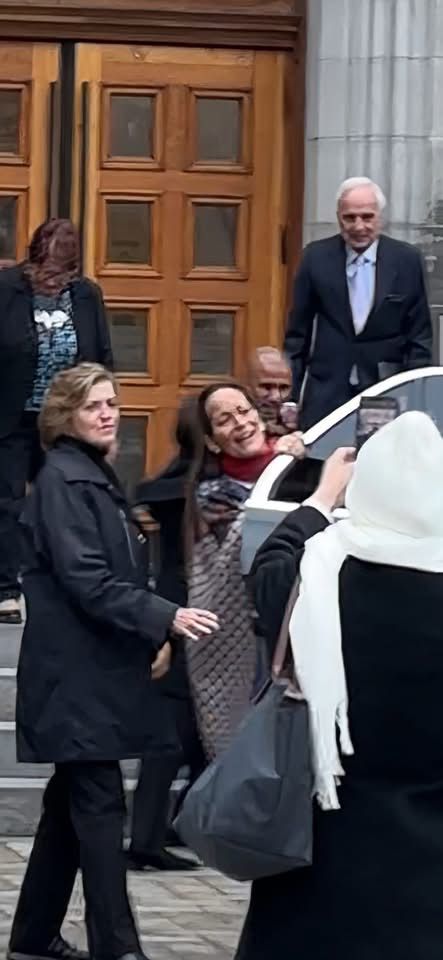
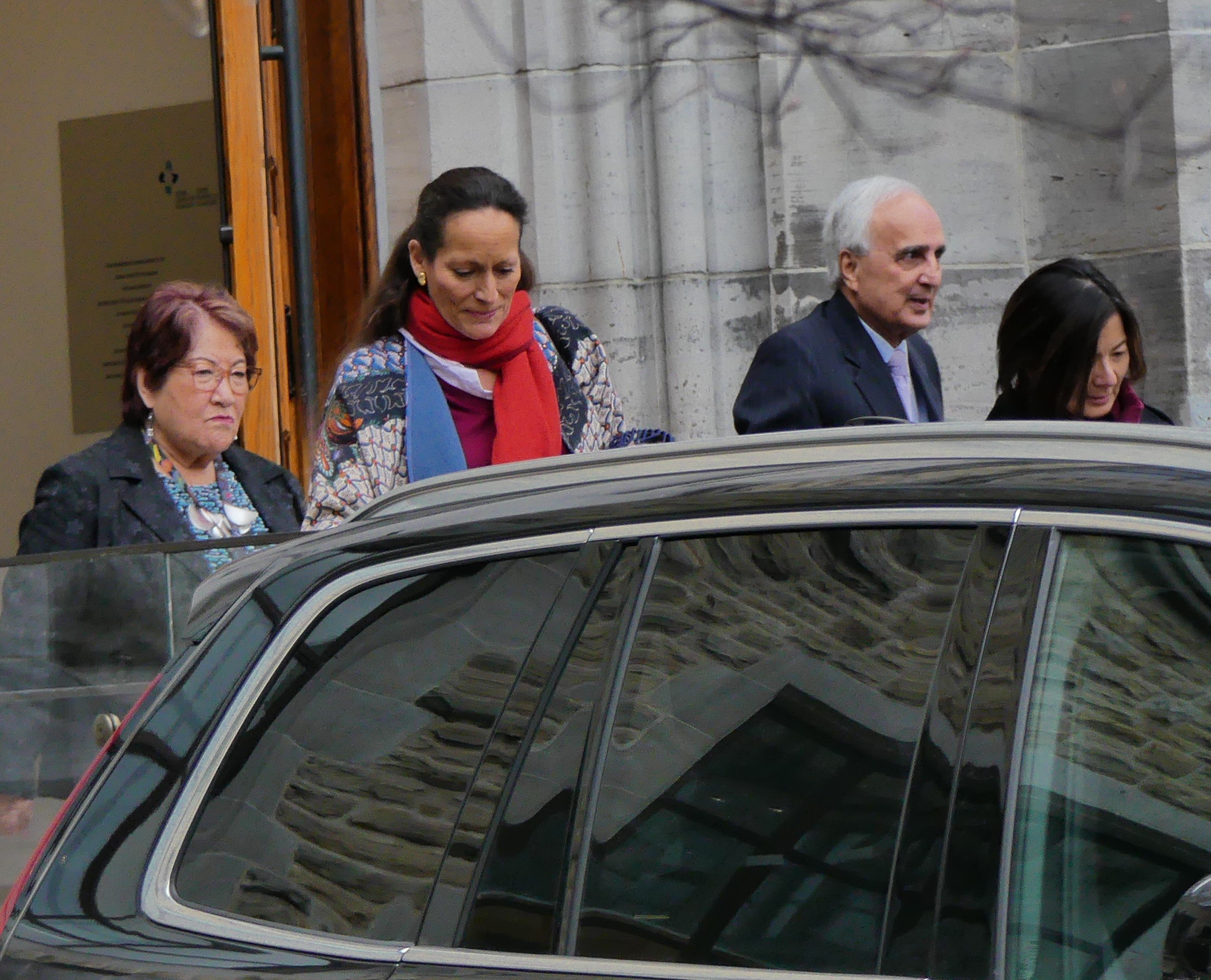
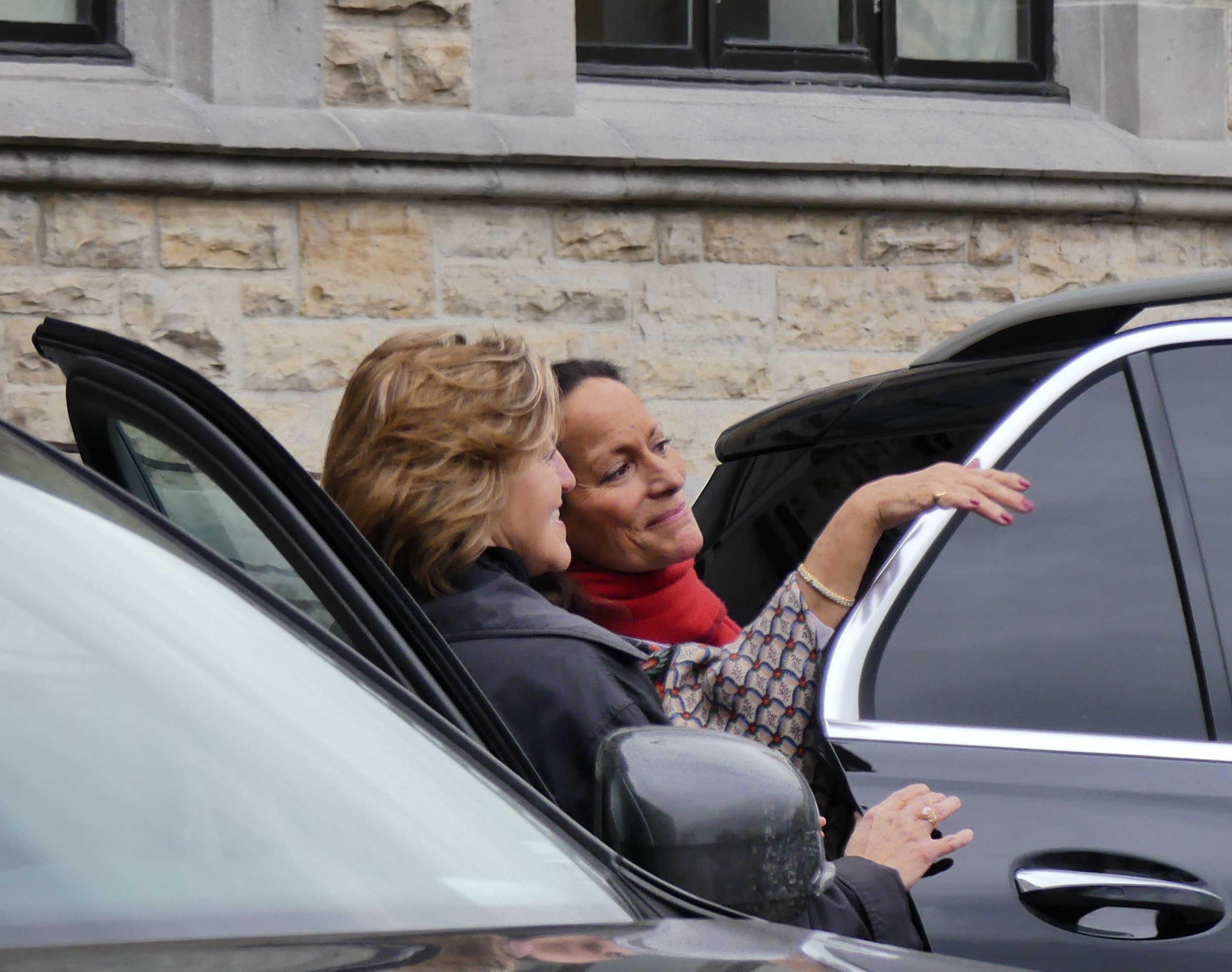
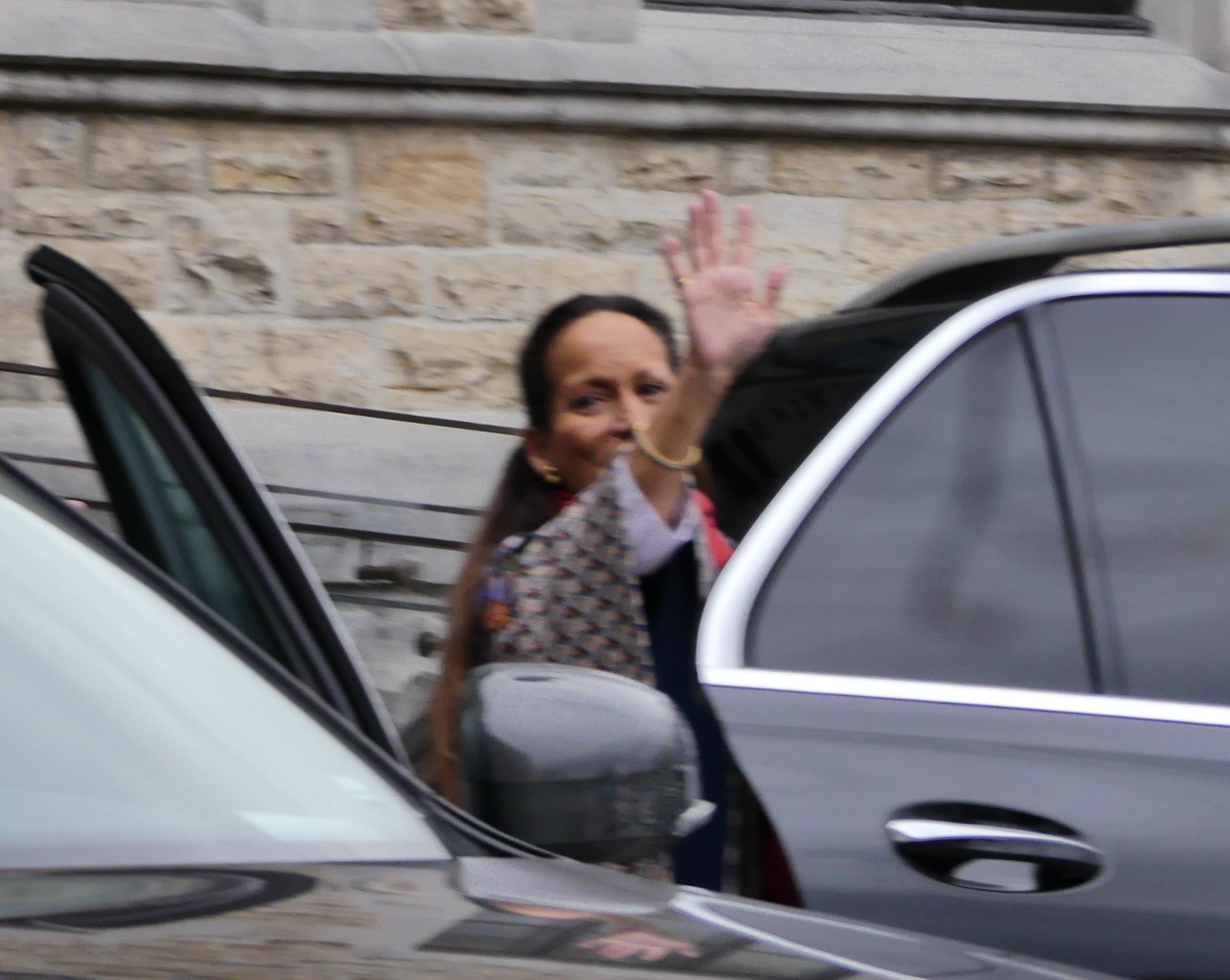
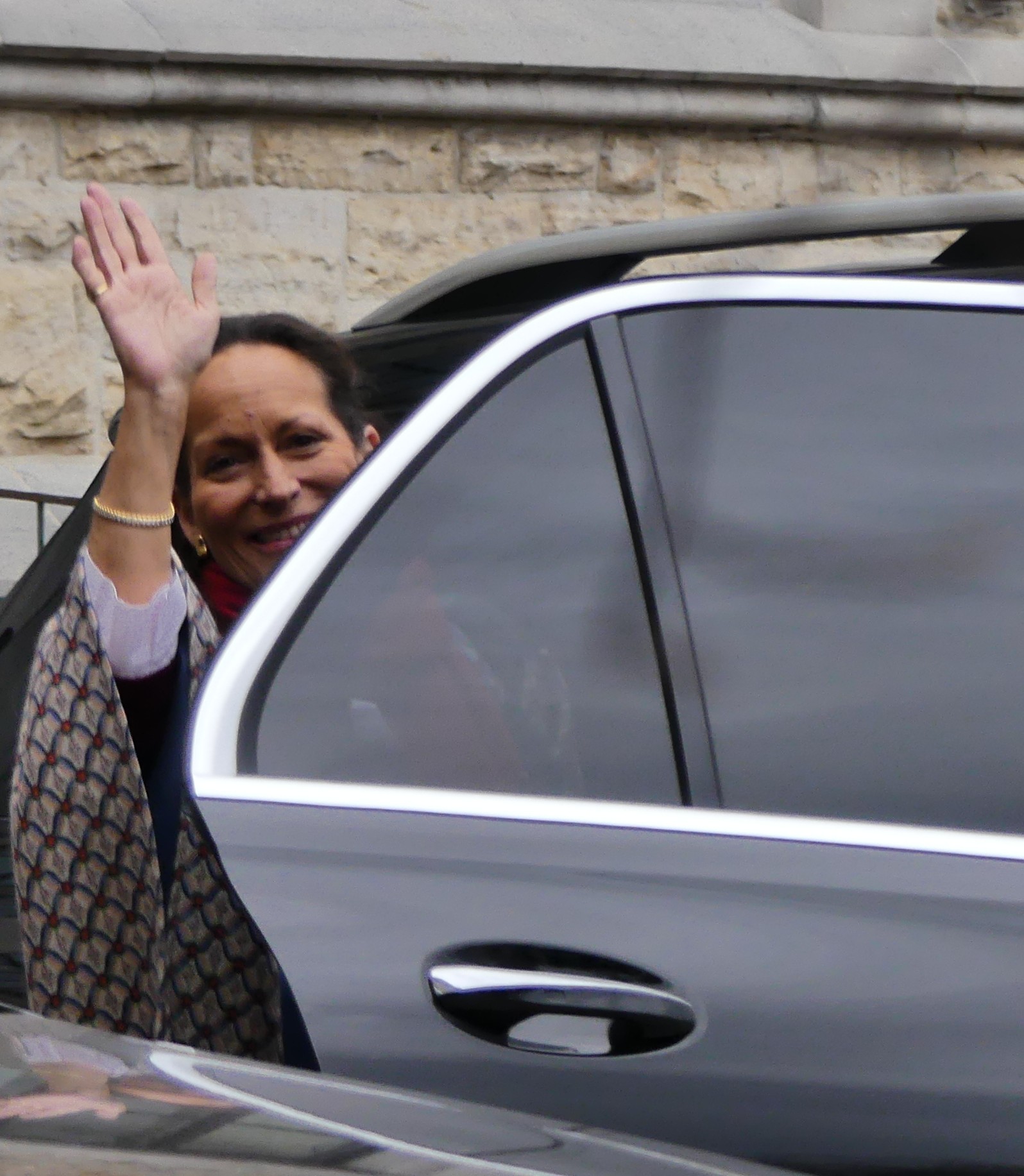
2025, November 25th: Princess Zahra arrived at 8:55am today in Ottawa for the GCP Award. She went to the Global Center for Pluralism for meetings. We saw the winners of the Award also join her there. About 30 Ismailis from vaious countries, none from Ottawa were waiting for her to come out. She left around 3:15pm and she waved at least 4 times to the Jamat before sitting in her car. She was radiant and smiling, it was cold outside but our hearts felt warm.

Many photos will be added tomorrow, Meanwhile here are some videos.

Video 1: https://ismaili.net/timeline/2025/2025-11-25-gcp1.mp4

Video 2: https://ismaili.net/timeline/2025/2025-11-25-gcp2.mp4

Image
Admin
Posts: 6531
Joined: Mon Jan 06, 2003 10:37 am
Contact:

Re: Aga Khan's Global Centre for Pluralism

Post by Admin »

2025, November 25:

Speech of Mowlana Shah Rahim Aga Khan V to the GCP Award ceremony: https://www.youtube.com/watch?v=hYqE_EJDLy4&t=251s
Admin
Posts: 6531
Joined: Mon Jan 06, 2003 10:37 am
Contact:

Re: Aga Khan's Global Centre for Pluralism

Post by Admin »

2025, November 25: Princess Zahra Aga Khan leaving Fairmont Chateau Laurier Hotel to go to the Awards Ceremony. Canadian Minister Anita Anand was in attendence and said so many good things about the Ismaili Community.

VIDEO Fairmont Chateau Laurier Hotel: https://ismaili.net/timeline/2025/2025- ... irmont.mp4

VIDEO: Leaving the GCP after the Award ceremony: https://ismaili.net/timeline/2025/2025- ... eaving.mp4

Image

Image
kmaherali
Posts: 23622
Joined: Thu Mar 27, 2003 3:01 pm

Re: Aga Khan's Global Centre for Pluralism

Post by kmaherali »

Global Pluralism Award ceremony honours peace-builders for pluralism

Image
The 2025 Global Pluralism Award laureates with secretary general Meredith Preston McGhie and award chair Dr Marwan Muasher.Photo: GCP / Wellington Imagery

Image
Meredith Preston McGhie, secretary general of the Global Centre for Pluralism, welcomes guests to the Delegation of the Ismaili Imamat in Ottawa.Photo: GCP / Wellington Imagery

Image
Canada’s Minister of Foreign Affairs Anita Anand addresses guests at the 2025 Global Pluralism Award Ceremony.Photo: GCP / Wellington Imagery

Image
Guests applaud at the Global Pluralism Award Ceremony in Ottawa on 25 November 2025.Photo: GCP / Wellington Imagery

Image
Princess Zahra presents a 2025 Global Pluralism Award to the Southern Africa Litigation Centre.Photo: GCP / Wellington Imagery

Image
The Southern Africa Litigation Centre was honoured for its social engagement to protect marginalised groups.Photo: GCP / Wellington Imagery

Image
Colombia Diversa earned its award for nearly two decades of advocacy securing human rights protections in Colombia.Photo: GCP / Wellington Imagery

Image
A Land for All won recognition for promoting a confederal solution in the Middle East.Photo: GCP / Wellington Imagery

Three organisations working to bridge divides in some of the world’s most fractured societies received the 2025 Global Pluralism Award at a ceremony in Ottawa last night, with seven others earning honourable mentions for their efforts to build inclusive communities.

Held at the Delegation of the Ismaili Imamat in Ottawa, Princess Zahra was present, alongside Canada’s Minister of Foreign Affairs Anita Anand, former Prime Minister Joe Clark, and former Governors General Adrienne Clarkson and Michaëlle Jean. Leaders of the Jamat and AKDN were also in attendance.

Mawlana Hazar Imam sent a video message https://youtu.be/_msFpgKPRhE, in which he spoke of the vital importance of pluralism, and encouraged learning from the diversity we encounter more each day.

“Once we take time to listen to another who we see as different from ourselves, and we start to understand their story, we may find we have more in common than we thought, and our conception of ‘we’ begins to expand.”

“As we congratulate and learn more about these exceptional laureates tonight,” Hazar Imam added, “I invite you to think about what meaningful action you can implement in your own life. Each of our choices matters in the face of our global challenges.”

The ceremony marked the culmination of a selection process that began with more than 300 applications from 64 countries. An international jury narrowed the field to 10 finalists in September before selecting the three winners in October.

The Southern Africa Litigation Centre https://award.pluralism.ca/laureate/sou ... on-centre/, based in South Africa, was honoured for its social engagement to protect marginalised groups across a region marked by high migration levels and xenophobia. The centre provides legal support and builds local lawyer capacity to defend vulnerable populations.

Colombia Diversa https://award.pluralism.ca/laureate/colombia-diversa/ earned its award for nearly two decades of advocacy securing human rights protections for LGBTQI+ people in Colombia. The organisation combines documentation of abuses during the country’s conflict with guerrillas, and public advocacy to achieve landmark victories including marriage equality and gender identity recognition.

A Land for All https://award.pluralism.ca/laureate/a-land-for-all/ won recognition for promoting a confederal solution between Israelis and Palestinians through two sovereign states with open borders, equal rights and shared institutions. The organisation has built a movement of thousands from both societies around the concept of a shared homeland with mutual recognition and dignity.

Seven organisations received honourable mentions: the Artistic Freedom Initiative https://award.pluralism.ca/laureate/art ... nitiative/ operating between the United States and Switzerland, Slovakia’s Cesta Von https://award.pluralism.ca/laureate/cesta-von/, Mexico’s Coordinadora Nacional de Mujeres Indígenas https://award.pluralism.ca/laureate/conami/, Brazil’s Mais Diferenças https://award.pluralism.ca/laureate/mais-diferencas/, Afghanistan’s New Life Trust Organization https://award.pluralism.ca/laureate/new ... anization/, the international Nonviolent Peaceforce https://award.pluralism.ca/laureate/non ... eaceforce/, and the regional Sudanese Youth Network for Ending the War and Establishing a Democratic Civil Transformation https://award.pluralism.ca/laureate/sud ... h-network/.

Meredith Preston McGhie, secretary general of the Global Centre for Pluralism (GCP), said the winners demonstrated that pluralism served as a practical necessity rather than a distant ideal in addressing polarisation and conflict.

“Those that we celebrate tonight are leaders that work against exceptional odds. They work against division, against pessimism, against polarisation, and against hate,” she said in her welcome remarks.

“Their work challenges us to step into our own communities, to speak to those we may prefer to avoid, to act when we see division. This is how pluralism happens.”

The 10 laureates join a community of approximately 50 award alumni recognised since the prize was established in 2017. The GCP presents the award every two years to individuals, organisations, governments and businesses advancing inclusive societies where diversity is valued and protected.

Award recipients will participate in a programme of in-kind support and engagement activities throughout 2026, allowing them to expand their work and share lessons with the broader pluralism community.

In her address to guests, Minister Anand offered a personal tribute to the Jamat and its embodiment of values that serve to unite: “I wanted to start off,” she said, “by mentioning how welcome I feel whenever I'm with the Ismaili community.”

“From the Stampede Breakfast in Calgary where families welcomed me with open arms to conversations that flowed so easily in Vancouver, Toronto and on the east coast—wherever I am with this community, I feel the same thing: a community that leads with warmth, and generosity, and deep respect.”

Marwan Muasher, the Award’s jury chair offered concluding remarks. “I’m incredibly moved,” he said, “by the remarkable stories of courage, humility, persistence, and the belief that at our core, each human being deserves to belong.”

“This year’s laureates are operating in the most difficult contexts of our time,” he explained. “They continue to put in herculean efforts for change, despite risks to themselves, finding the smallest windows of opportunity and making sure the light still comes in.”

“They impressed us with their ability to bring about real change,” he added. “If they have not given up, how can we?”

https://the.ismaili/pt/en/news/global-p ... -pluralism
Admin
Posts: 6531
Joined: Mon Jan 06, 2003 10:37 am
Contact:

Re: Aga Khan's Global Centre for Pluralism

Post by Admin »

2025, November 25th: Princess Zahra arrived at 8:55am today in Ottawa for the GCP Award. She went to the Global Center for Pluralism for meetings. We saw the winners of the Award also join her there. About 30 Ismailis from vaious countries, none from Ottawa were waiting for her to come out. She left around 3:15pm and she waved at least 4 times to the Jamat before sitting in her car. She was radiant and smiling, it was cold outside but our hearts felt warm.

Many photos will be added tomorrow, Meanwhile here are some videos.

Video 1: https://ismaili.net/timeline/2025/2025-11-25-gcp1.mp4

Video 2: https://ismaili.net/timeline/2025/2025-11-25-gcp2.mp4

Image

Image

Image

Image

Image
Post Reply