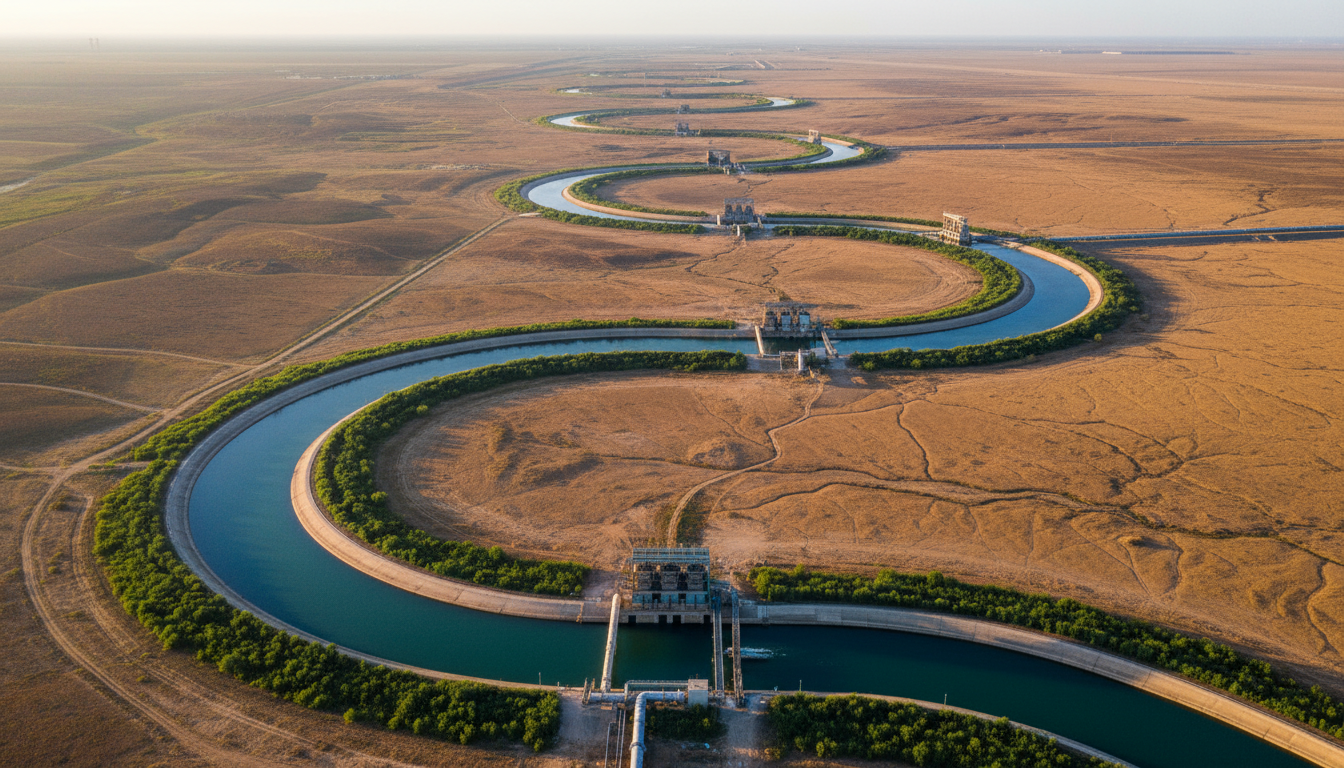
Libya built over 4,000 kilometers of underground pipelines to bring water from the Sahara to coastal cities in a project that the government itself called the Eighth Wonder of the World.
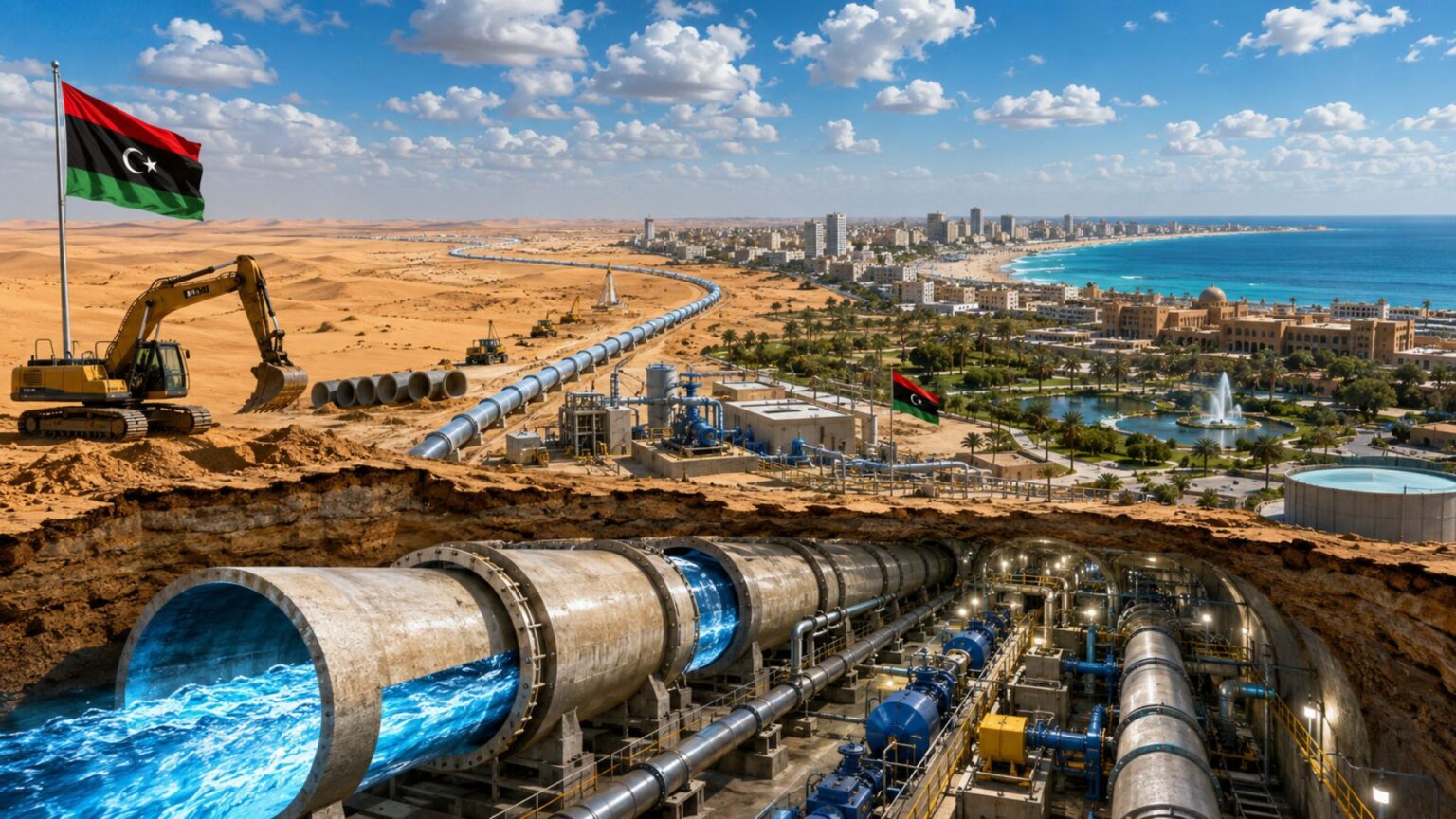
Named the Great Man-Made River, the Libyan system of underground pipelines traverses the desert to extract water up to a million years old and supply Tripoli, Benghazi, and other cities in the north of the country. The project, described by Britannica as the largest irrigation project in the world, began in the 1980s and is still expanding.
Beneath the Libyan Sahara, there is water. A lot of water. Accumulated in deep aquifers over millennia, this reserve was discovered in the 1950s during drilling for oil in the Al-Kufrah region. What was found underground was not fuel, but something equally valuable in an arid country: billions of cubic meters of fossil water, infiltrated into porous rock before the end of the last ice age, when the Sahara still had a temperate climate. To bring this resource to the populous coast, the Libyan government built one of the most ambitious engineering works of the 20th century: a network of underground pipelines with a designed capacity to transport 6.5 million cubic meters of water per day, as described by Britannica.
The project was named the Great Man-Made River, or GMR for short in English. Since 1991, when the first phase became operational, it supplies cities and agricultural areas in northern Libya that previously relied on desalination and rapidly declining coastal aquifers. The Libyan government even proclaimed the work as the Eighth Wonder of the World. Scholars and critics are more cautious with such superlatives, but none contest the scale of the engineering involved: a network that, when complete, will have about 4,000 kilometers of pipeline crossing the desert.
Water a million years old beneath the desert
Libya built over 4,000 km of underground pipelines in the Sahara to bring fossil water to coastal cities in a project called the Eighth Wonder of the World.
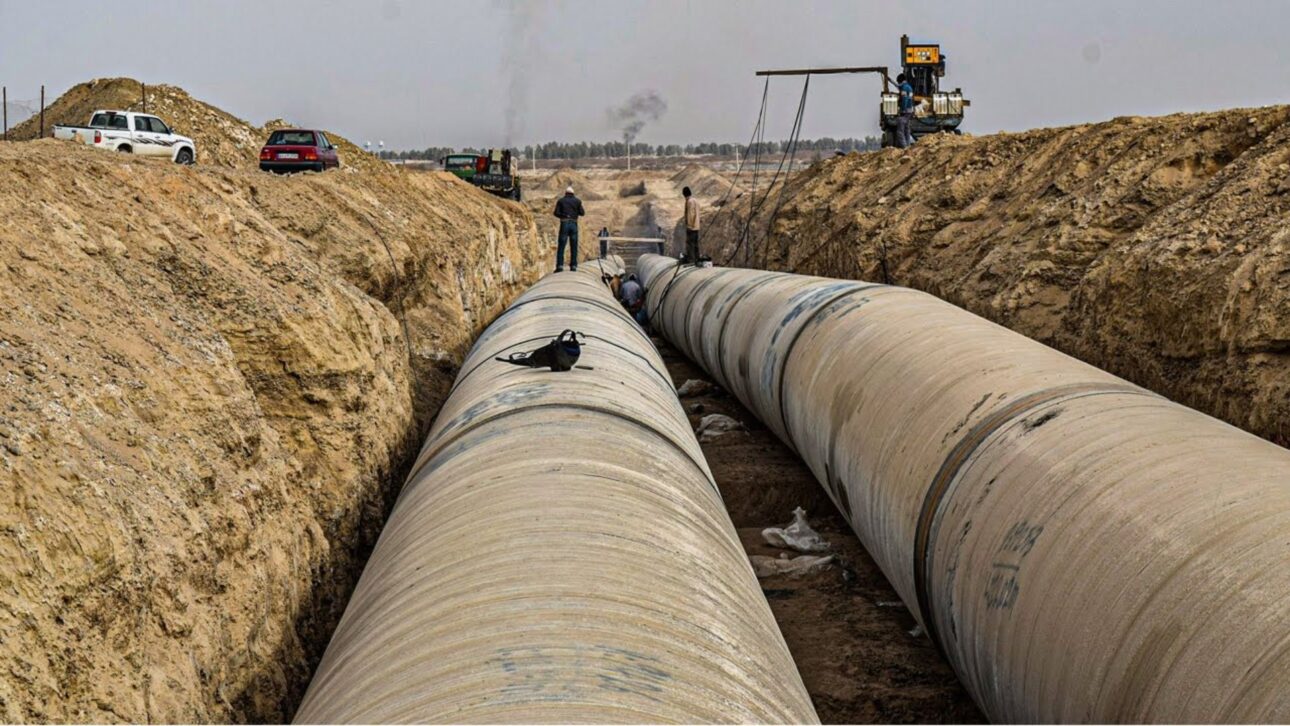
The Nubian Sandstone Aquifer System, from which Libya extracts the water for the Great Man-Made River, is one of the largest underground freshwater reservoirs in the world.
The estimated age of the water varies between 10,000 and 1 million years, according to Britannica, a period during which it remained trapped in porous sandstone without contact with the surface.
This water is called fossil precisely because its natural recharge cycle practically does not exist under the current climatic conditions of the Sahara.
This is where the project’s crux lies. A fossil aquifer does not renew itself. Every cubic meter pumped is one cubic meter less forever. Libyan officials have claimed, as cited by Britannica, that the reserves could last thousands of years.
Critics vehemently contest this estimate, and some even say that the system may not withstand the 21st century if extraction continues at the current pace.
Libya bet on a finite resource to solve a permanent problem, and this equation still has no clear answer.
How the Underground Pipelines Were Built
Libya built over 4,000 km of underground pipelines in the Sahara to bring fossil water to coastal cities in the project called the Eighth Wonder of the World.
Phase I of the project began in 1983, when the Great Man-Made River Authority awarded the first construction contract.
Hundreds of wells were drilled about 500 meters deep in the Tāzirbū and Sarīr fields in the south of the country.
From there, the underground pipelines carry the pumped water hundreds of kilometers to a reservoir in Ajdābiyā, from where it goes to Benghazi in the north and Surt to the west. The formal completion of Phase I was celebrated in Benghazi in 1991.
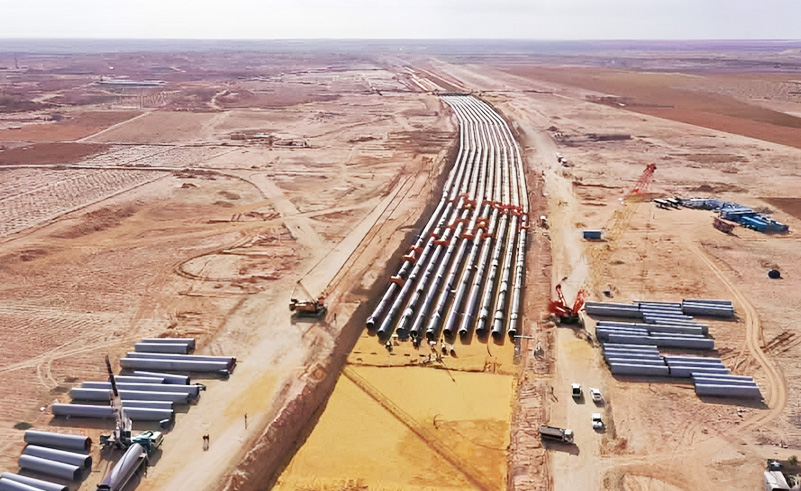
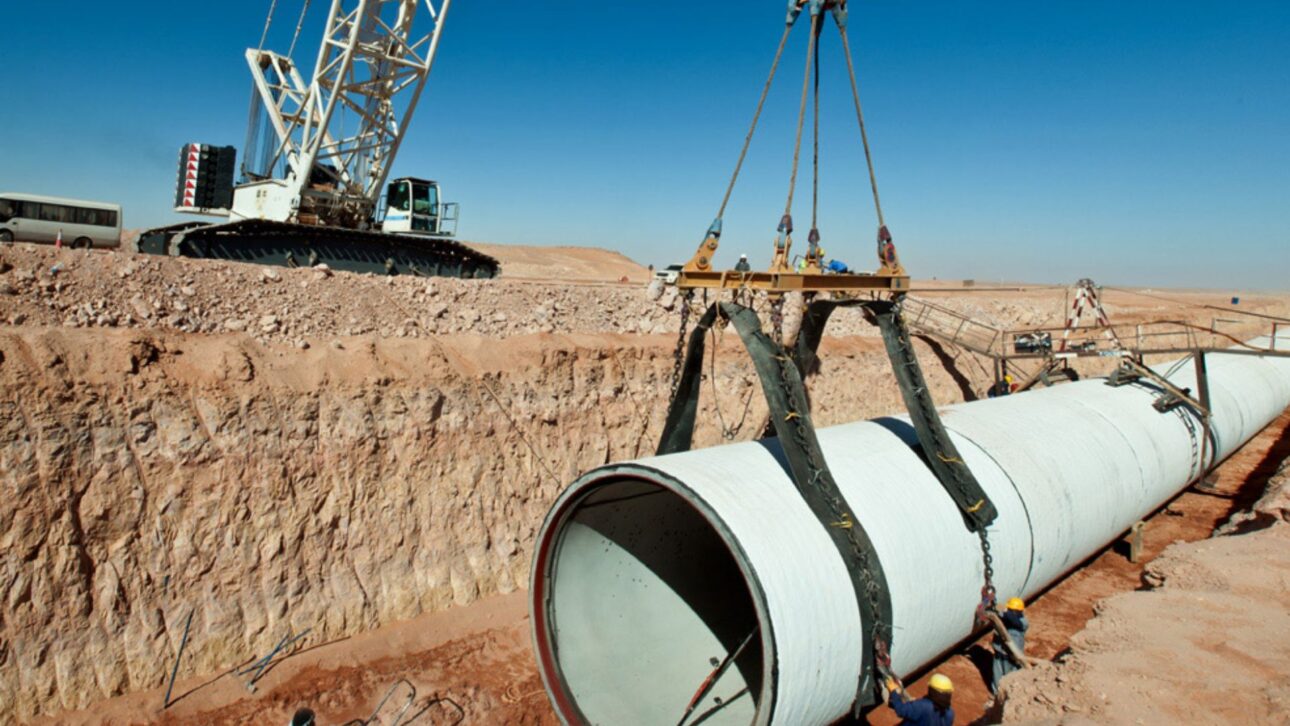
The pipes used in this phase were considered, at the time, the largest in the world: 4 meters in diameter and 7 meters in length each, made of prestressed concrete reinforced with steel in two factories built specifically for the project within Libya itself.
They were installed in 7-meter deep trenches with specially developed cranes, positioned with tractors, and sealed with giant rubber rings and cement mortar, according to Britannica.
There were 250,000 pipe segments along 1,600 kilometers just in the first phase.
Three Phases Completed, Two Still Under Construction
Libya built over 4,000 km of underground pipelines in the Sahara to bring fossil water to coastal cities in the project called the Eighth Wonder of the World.
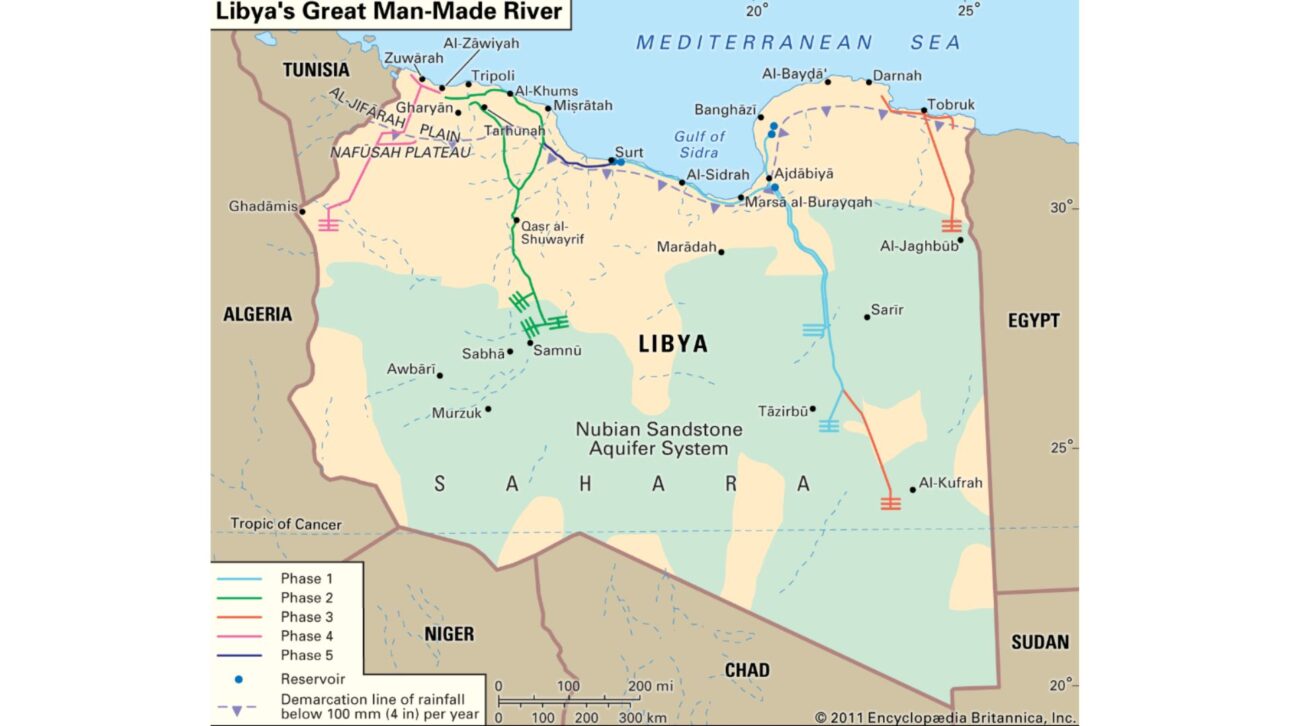
Phase II of the Great Man-Made River began operating in 1996, supplying Tripoli, the country’s capital.
In this section, the water comes from three well fields in the Jabal al-Ḥasāwinah region and travels two distinct paths: one pipeline pumps the water to Tarhūnah, on the Nafūsah plateau, from where it flows by gravity to the Al-Jifārah plain.
Another segment goes to the coast, passing through Misurata and Al-Khums and ending in Tripoli. The designed capacity of this phase is 2.5 million cubic meters per day, according to Britannica.
Phase III was completed in 2009 and added an additional 1,200 kilometers of underground pipelines to the system.
Part of these new ducts expanded the Phase I network, increasing the total capacity to 3.68 million cubic meters daily.
The other part brought water for the first time to Tobruk, coming from the Al-Jaghbūb oasis, requiring the construction of a reservoir south of the city and another 500 kilometers of pipeline.
Two additional phases, GMR 4 and GMR 5, are still planned to connect more remote regions to the central system.
The reservoirs: artificial lakes carved into the rock
The distribution nodes of the system are not ordinary water tanks.
They are open reservoirs carved directly into the soil and rock, lined with asphalt to prevent infiltration and evaporation.
The largest of them, located in Ajdābiyā, is over a kilometer in diameter and has a capacity of 24 million cubic meters of water, according to Britannica.
They are artificial lakes in the middle of the desert, fed by pipelines that come from hundreds of kilometers below the Sahara sand.
This engineering choice has practical advantages. Open reservoirs are easier to inspect and maintain than closed tanks on a similar scale.
They allow visual monitoring of water quality and access to the stored volume from multiple exit points.
The downside is evaporation, significant in arid regions with high temperatures.
In a project that moves fossil water from points without natural replenishment, every liter evaporated is a liter that doesn’t return.
What the world learned from this project
The Great Man-Made River was not built solely with Libyan expertise.
Engineering companies from various countries participated in the different phases of the project, according to Britannica, making it an international technical reference in large-scale water infrastructure.
The logistics of manufacturing, transporting, and installing 250,000 concrete segments in the desert generated applied knowledge that influenced similar projects in other arid regions of the world.
The model also raises questions that countries with similar water situations will need to answer: how long does a fossil aquifer last under intensive extraction?
When and how to plan the transition to renewable water sources, such as desalination, before the underground resource is depleted?
Libya bet decades and billions of dollars on a solution that works now but has an uncertain expiration date.
This dilemma between immediate need and long-term sustainability is the most complex legacy that the Great Man-Made River leaves for the debate on global water management.
A project that is not yet finished
With the GMR 4 and GMR 5 phases still pending, the complete project plans to connect the well fields in the Al-Kufrah region, in the far southeast of the country, to the central system, as well as a pipeline linking wells near Ghadames, in the western desert, to the coastal cities of Al-Zāwiyah and Zuwārah.
The complete network will have about 4,000 kilometers of pipeline and a capacity of 6.5 million cubic meters of water per day, according to Britannica.
The political context in Libya in recent years, marked by instability and conflict since 2011, affects the pace of expansion and maintenance of the system.
Infrastructure of this complexity requires continuous management, spare parts, qualified technical personnel, and institutional stability to function at its full potential.
The Great Man-Made River has survived decades of political turmoil, but its technical longevity depends as much on the geology of the aquifers as on the Libyan state’s ability to maintain what has been built.
Building 4,000 kilometers of underground pipelines to extract fossil water from the Sahara was a genius solution or an irresponsible bet on a non-renewable resource? Should other countries in critical water situations study the Libyan model or avoid it? Leave your opinion in the comments.
https://en.clickpetroleoegas.com.br/lib ... ent-btl96/