Alamut

After the Times of Imam Mustansir Billah
Post Reply
From_Alamut
Posts: 666
Joined: Tue Jan 22, 2008 8:22 am

Alamut

Post by From_Alamut »

Alamut

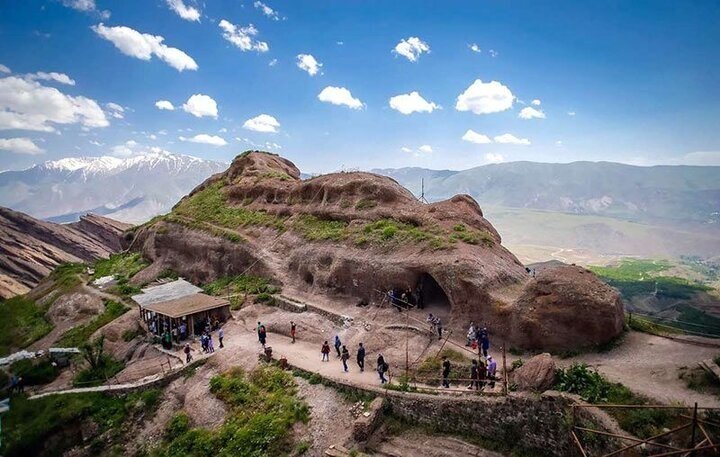
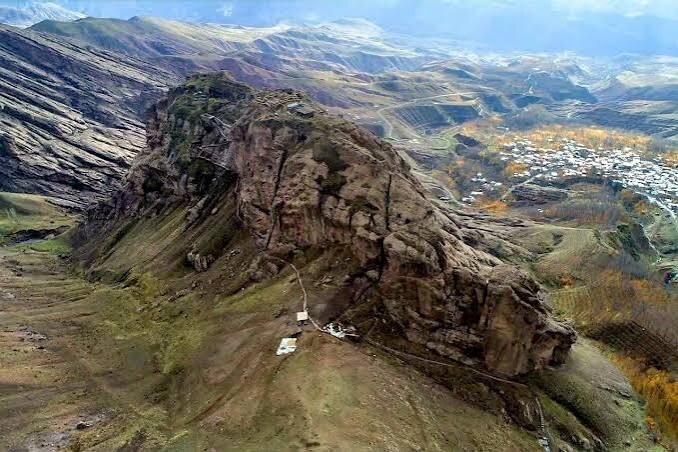
"Alamut is a historical fortress of the Nizari Ismailis. Its location in mountainous terrain lies about 100 km. Northwest of Tehran, and situated in the high peak of Elburz mountain. Alburz generally was pronounced as Elburz, is the name given to great mountain range, dividing the high plateau of Iran from the low lands of Caspian Sea. The original Iranian word Alburz is derived from two Zand words, signifying the high mountain. The fortress of Alamut is 600 feet high, 450 feet long and 30 to 125 feet wide and is partly encompassed by the towering Elburz range. The rock of Alamut is known at present as Qal'ai Guzur Khan.

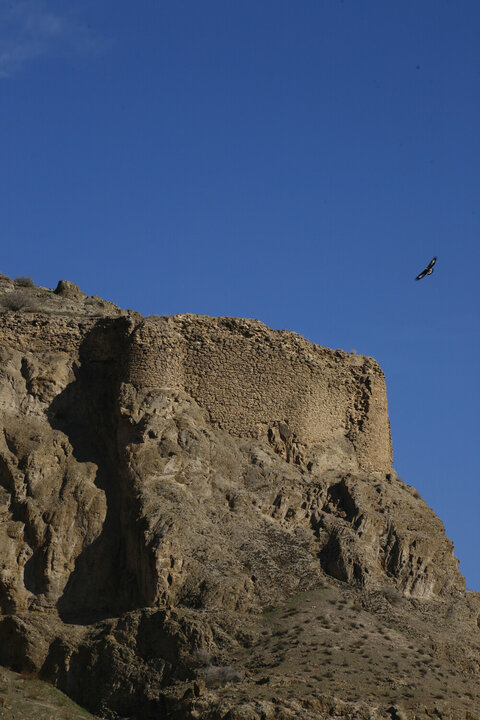
The Justanid dynasty of Daylam was founded in 189/805, and one of its rulers, called Wahsudan bin Marzuban (d. 251/865) is reported to have built the fortress of Alamut in 246/860. Ibn Athir (d. 630/1234) records its anecdote in his Kamil fi't Tarikh (Beirut, 1975, 10:110) that once the ruler, while on hunting excursion had followed a manned eagle, which alighted on the rock. The king saw the strategic value of the location and built a fort on the top of a high piercing rock and was named aluh amut, which in the Daylami dialect, derived from aluh (eagle) and amut (nest), i.e., eagle's nest as the eagle, instead of following the birds, had built its nest on that location. According to Sar Guzasht-i Sayyidna, the term alamut is aluh amut i.e., the eagle's nest, and an eagle had its nest there. Ibn Athir relates another tradition that the eagle had taught and guided the king to this location, therefore, it was named talim al-aqab (the teaching or guidance of an eagle), whose rendering into Daylami dialect is aluh amut. The word aluh means eagle and amutis derived from amukhat means teaching. The people of Qazwin called it aqab amukhat (the teaching of eagle). Thus, the term aluh amut (or aqab amukhat) later on became known as Alamut. The Iranian historians have drawn attention that if one gives to each letter in the full name of Aluh Amut, its numerical value in the traditional abjad system of alpha-numeric corresponds the sum total of 483, which represents the year in which Hasan bin Sabbah obtained possession of Alamut, i.e. 483/1090.

Afterwards, the Musafirid dynasty, also known as Sallarids or Kangarids (304-483/916-1090) founded by Muhammad bin Musafir (304-330/916-941), who ruled from the fortress of Shamiran in the district of Tarum at Daylam and Azerbaijan. Later, Mahdi bin Khusaro Firuz, known as Siyahchashm, retained the occupation of Alamut. He was however defeated by the Musafirid ruler, Ibn Musafir in 316/928 and henceforward, there is no historical indication about the fate of Alamut following the death of Ibn Musafir in 319/931.

When Hasan bin Sabbah arrived in Iran from Egypt, the fortress of Alamut was in possession of an Alid, called Hussain Mahdi, who had it as a fief from the Seljuq sultan Malikshah. Hasan Mahdi was a descendant of Hasan bin Ali al-Utrush (d. 304/916), one of the Alid rulers of Tabaristan, also known as al-Nasir li'l-Haq, who had established a separate Zaidi community in the Caspian Sea. It is related that a da'i Hussain Qaini, working under Hasan bin Sabbah had created his friendship with Hussain Mahdi. The Ismaili da'is also converted a bulk of the people around the territory, and became powerful to some extent. These Ismailis also began to come in the fortress. Knowing this, Hussain Mahdi expelled them and closed its doors. Finally, Hussain Mahdi was compelled to open the doors due to the growing influence of the Ismailis in the vicinity.

Hasan bin Sabbah moved to Ashkawar and then Anjirud, adjacent to Alamut, and on Wednesday, the 6th Rajab, 483/September 4, 1090, he stealthily entered the castle of Alamut. He lodged there for a while in disguise, calling himself Dihkhuda and did not reveal his identity to Hussain Mahdi, but as the days rolled away, the latter noticed that he was no longer obeyed, that there was another master in Alamut. The bulk of Alamut's garrison and a large number of the inhabitants had embraced Ismailism, making Hussain Mahdi powerless to defend himself or make their expulsion, but himself left the fortress. Thus, Alamut was occupied without any massacre and taken to be known as daru'l hijra (place of refuge) for the Ismailis.

Ata Malik Juvaini (1226-1283) had seen the fortress of Alamut when it was being shattered in 654/1256. He writes in Tarikh-i Jhangusha (Cambridge, 1958, p. 719) that, "Alamut is a mountain which resembles a kneeling camel with its neck resting on the ground." It was situated in Daylam about 35 km. north-west of Qazwin in the region of Rudhbar. It was physically a large towering rock, with steep slopes hardly negotiable on most sides, but with a considerable expanse at its top where extensive building could be done.

Halagu, the Mongol commander reduced the fort of Alamut. He came with his forces at the foot of Alamut in 654/1256, whose Ismaili commander was Muqadinuddin. After a few days, the garrison of Alamut dismounted. Berthold Spuler writes in The Muslim World (London, 1969, 2:1 8) that, "The fortress Alamut offered a desperate resistance to the onslaughts of the Central Asian hordes and only suc*****bed after a prolong siege." Towards the end of Zilkada, 654/December, 1256, all the persons in Alamut came down with all their goods and belongings and after three days, the Mongols climbed up to the castle and seized whatever those people had been unable to carry off. They also plundered freely whatever they found in the castle, and then set fire to its building and its library. Meanwhile, Ata Malik Juvaini, who had accompanied Halagu to the foot of Lamasar, had been granted permission to inspect the library. He saved a number of choice books, including some Ismaili works, as well as certain astronomical instruments, before consigning the library to flames. Thus, the accumulated literary treasure of about two centuries was consumed to ashes. Juvaini himself writes, "I burnt them all" (basukh tam). Edward G. Browne termed it, "world's renowned library." Arif Tamir writes in Khams Rasail Ismailiyya (Beirut, 1956, p. 195) that, "The Mongol destroyed the Ismaili library containing one and one half million volumes."

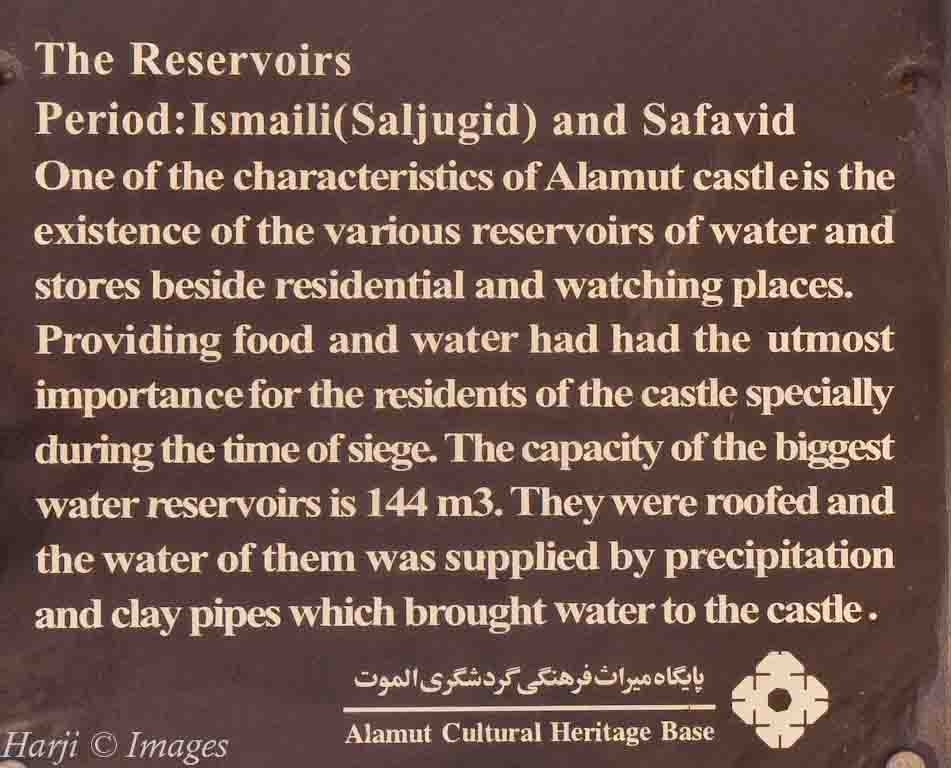
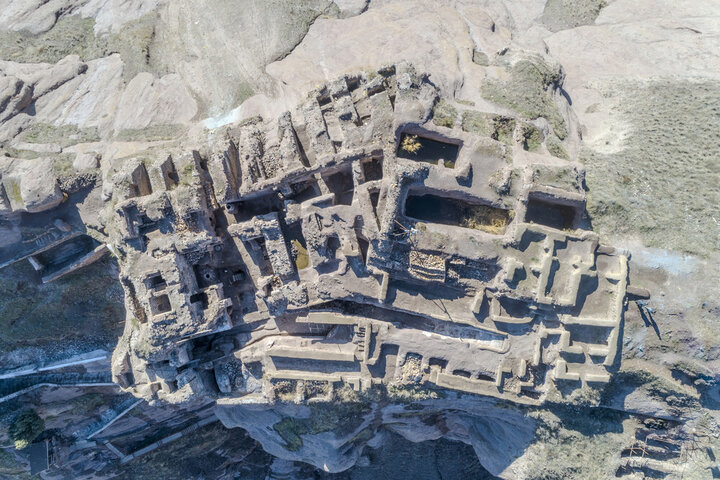
As for the Alamut, Juvaini writes, "It was a castle whereof the entries and exits, the ascents and approaches had been so strengthened by plastered walls and lead-covered ramparts that when it was being demolished, it was as though the iron struck its head on a stone, and it had nothing in its hand and yet resisted. And in the cavities of these rocks they had constructed several long, wide and tall galleries and deep tanks, dispensing with the use of stone and mortar...And from the river, they had brought a conduit to the foot of the castle and from thence a conduit was cut in the rock half way round the castle and ocean-like tanks, also of rock, constructed beneath so that the water would be stored in them by its own impetus and was continually flowing on. Most of these stores of liquids and solids, which they had been laying down from the time of Hasan-i Sabbah, that is over a period of more than 170 years, showed no sign of destruction, and this they regarded as a result of Hasan's sanctity. (2:720-1) Juvaini goes on to tell how a large body of Mongol soldiers were employed in demolishing the castle: "Picks were of no use: they set fire to the buildings and then broke them up, and this occupied them for a long time." (Ibid.)

The Ismaili rule in Alamut lasted for 171 years (483/1090-654/1256). In its early period, the following three hujjats were the rulers of the Alamut:-

1. Hasan bin Sabbah (483/1090-532/1138)
2. Kiya Buzrug Ummid (532/1138-532/1138)
3. Muhammad bin Kiya Buzrug (532/1138-554/1160)

The following eight Imams flourished during the Alamut rule:-

1. Imam Hadi bin Nizar (490-530/1097-1136)
2. Imam Mohtadi bin Hadi (530-552/1136-1157)
3. Imam Kahir (552-557/1157-1162)
4. Imam Hasan Ala Zikrihi's Salam (557-561/1162-1166)
5. Imam Ala Muhammad (561-607/1166-1210)
6 Imam Jalaluddin Hasan (607-618/1210-1221)
7. Imam Alauddin Muhammad (618-653/1221-1255)
8. Imam Ruknuddin Khurshah (653-655/1255-1257)

The Mongols in fact reconstructed Alamut and Lamasar and retained for their own use. When Halagu left Iran for his operations against Baghdad, the Ismaili commanders at remote distance had also surrendered their castles upon receipt of official orders without knowing veritable picture. Few among them are reported to have trekked in Rudhbar after the massacre of the Ismailis in 656/1257. They made an intensive search of the succeeding Imam after being known that Imam Ruknuddin Khurshah had been also killed. Hamidullah Mustawi (d. 750/1349) writes in Tarikh-i Guzida (1:583) that a group of the Ismailis led by the son of Imam Ruknuddin Khurshah, whose title was Naw Daulat or Abu Daulat, managed to obtain possession of Alamut in 674/1275. The reason for re-occupation, as we have been informed, was to give an inkling to the hiding Imam and the Ismailis to come out of concealment. If this version certainly embodies grain of truth, it implies that the Ismailis of Rudhbar were not yet acquainted with the whereabouts of the Imam. According to Tarikh-i Guzida (1:583), "They retained Alamut for almost one year before they were dislodged by a force sent against them by Halagu's son and successor Abaqa (d. 680/1282)."

Muhammad Shah (d. 807/1404), the son of Momin Shah bin Imam Shamsuddin Muhammad is reported to have appeared in Daylam. He is said to have joined Kiya Malik, the Hazaraspid ruler for taking the possession of Ashkawar. Muhammad Shah formed his force, and subdued Syed Mahdi Kiya with the help of Kiya Malik. Syed Mahdi Kiya was arrested and sent to Tabriz in the court of sultan Uways (757-776/1356-1374), the Jalayirid ruler of Azerbaijan. Kiya Malik reinstated his rule in Ashkawar, and granted the hold of Alamut and its locality to Muhammad Shah in 776/1374. Syed Mahdi Kiya released from imprisonment in 778/1376 with the influence of Tajuddin Amuli, the Zaidi Syed of Timjan. Soon afterwards, Syed Ali Kiya took field against Ashkawar and defeated Kiya Malik, who fled to Alamut in the hope of being assisted once again by Muhammad Shah, but failed, therefore, he took refuge with Taymur. Meanwhile, the forces of Syed Ali had laid siege to Alamut while pursuing Kiya Malik, and took possession of the stronghold. Syed Ali was later defeated and killed in 791/1389 by the Nasirwands of Lahijan. Kiya Malik returned to Daylam and captured Alamut from Amir Kiya'i Syeds. Soon afterwards, following the murder of Kiya Malik, Muhammad Shah appeared once again in Daylam, and took possession of Alamut. But he soon surrendered Alamut to the Gawbara ruler of Rustamdar, Malik Kayumarth bin Bisutun (d. 857/1453). Then, Alamut passed into the occupation of the rulers of Lahijan.

The Safavid Shah Suleman (d. 1105/1693) is reported to have used the fortress of Alamut as a state prison for the rebellious persons from among his courtiers and relatives. At that time, only a few Ismaili families resided in the lower Caspian region.

By: Dr. D.S. Merchant

Article Directory: http://www.articledashboard.com
From_Alamut
Posts: 666
Joined: Tue Jan 22, 2008 8:22 am

Re: Alamut

Post by From_Alamut »

Check Elburz mountains of Alamut in Iran by Google Map

http://maps.google.ca/maps?hl=en&source ... a=N&tab=wl
kmaherali
Posts: 24562
Joined: Thu Mar 27, 2003 3:01 pm

Post by kmaherali »

The following is a news clip (an educational video) by Press TV in Iran. The reporter is visiting the Alamut Castle, shows some ongoing restoration/development and gives a bit of a background on Hassan-i-Sabbah and the Ismailis. An interesting watch.


http://www.youtube.com/watch?v=J1jg9DnB ... ata_player
kmaherali
Posts: 24562
Joined: Thu Mar 27, 2003 3:01 pm

Post by kmaherali »

My Journey to Alamut Where Every Stone Tells a Story
September 10, 2012
By simergphotoblog
By Ali M. Rajput

http://simergphotoblog.wordpress.com/20 ... s-a-story/
kmaherali
Posts: 24562
Joined: Thu Mar 27, 2003 3:01 pm

Post by kmaherali »

Piecing the Alamut Puzzle Together

By Nadir Mackwani

http://simerg.com/modern-artistic-expre ... -together/
kmaherali
Posts: 24562
Joined: Thu Mar 27, 2003 3:01 pm

Post by kmaherali »

From_Alamut
Posts: 666
Joined: Tue Jan 22, 2008 8:22 am

Post by From_Alamut »

kmaherali wrote:Castle of Soru, Iran

http://ismailimail.wordpress.com/2013/0 ... ilimail%29
We have a lot of great Castles of our history in Iran and other countries. I wish and hope that our Beloved Imam of the times rebuild them some day Inshallah:D
Admin
Posts: 6888
Joined: Mon Jan 06, 2003 10:37 am
Contact:

Post by Admin »

presstv.ir/detail/2014/11/16/386253/iran-to-offer-alamut-castle-to-unesco/

Friday Nov 21, 201402:15 PM GMT

Iran plans to offer Alamut Fortress to UNESCO

Image

Iran plans to offer the historical Alamut Fortress to UNESCO for a possible inscription on the World Heritage list of the UN organization.

Located in Alamut region in Iran’s Qazvin Province, the castle is a mountain structure built on a massive rock in an altitude of 2,100 meters above sea level.

The fabled ruin of Alamut Castle owns historical significance dating back to around 1090 AD, when Hassan Sabbah, the leader of Ismailites in Iran, chose the Alamut region as his headquarters.

The origins of the Alamut Fortress can be traced back to the Kings of Daylam, a Justanid ruler, at the end of the 8th century, who selected the area for the construction of a fortress.

The fortress was demolished and set ablaze by Hulagu of Mongolia in 1256. Later the site was only used as prison and a place of exile.

World Heritage site is a title that is given to locations that have “outstanding universal value” to humanity, according to the UNESCO description.

Armenian monastic ensembles of Iran, Bam and its cultural landscape, Bisotoun, Naqsh-e Jahan Square, Pasargadae, Persepolis, Sheikh Safi al-din shrine, Shoushtar historical hydraulic system, Tabriz historic bazaar complex, Chogha Zanbil and the Persian garden are some of the Iranian historical heritage sites that have been inscribed on the UNESCO World Heritage List.

FGP/HSN/KA
tret
Posts: 1196
Joined: Thu Sep 09, 2010 2:09 pm

Post by tret »

Admin - I don't believe this is the picture of Alamut! I know it is the source where you took this article, but the picture is misleading, and not the true picture of Alamut. I think it's in Turkey somewhere.
Admin
Posts: 6888
Joined: Mon Jan 06, 2003 10:37 am
Contact:

Post by Admin »

The article on Press-TV (see url above) has been posted here without any change or addition. This is how it appears (with this photo on their web-site)

I agree that this might be just a castle which has nothing to do with Alamut but I can not change what they published.

The last photos I saw of Alamut were very different and the traces of the castle were bearly visible.
Admin
Posts: 6888
Joined: Mon Jan 06, 2003 10:37 am
Contact:

Post by Admin »

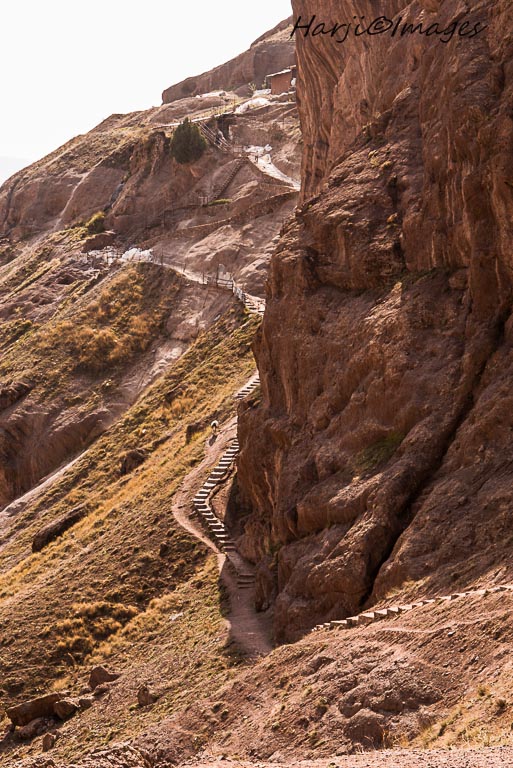
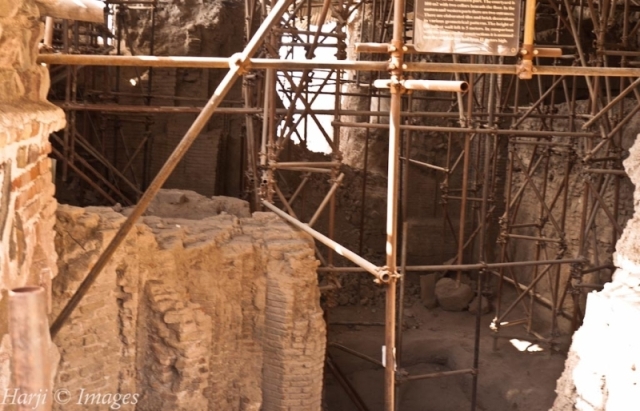
Here is a recent photo of Alamut as it appears today. The photo was taken by Muslim Harji recently.

Image


Image


Image


Image
kmaherali
Posts: 24562
Joined: Thu Mar 27, 2003 3:01 pm

Post by kmaherali »

Fragments of pottery reveal artistic skills of the Nizaris of Alamut

In 1090, Hasan Sabbah acquired the fortress of Alamut in northern Iran, marking the founding of what was to become the seat of the Nizari Ismaili state.

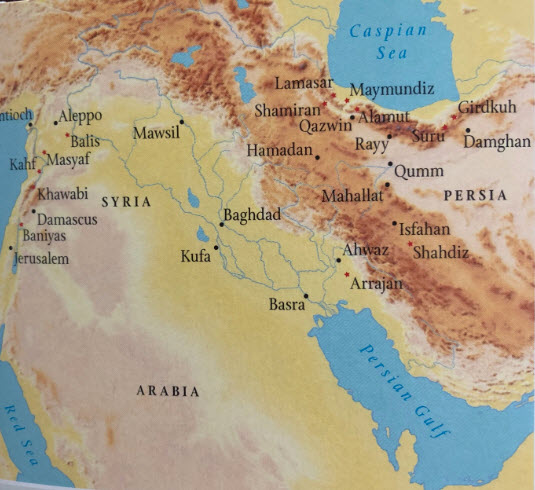
Over the course of the next 150 years, the Ismailis acquired more than 200 fortresses in Iran and Syria, located in the inaccessible mountainous regions for refuge of the Nizari Ismailis who were fleeing persecution by the Saljuqs and others during the early Middle Ages. These settlements were also a sanctuary for other refugees, irrespective of their creed, fleeing persecution.

The Nizari Ismailis of the Alamut period placed a high value on intellectual activities despite having to defend against military attacks. Alamut and several of the Nizari strongholds became flourishing centres of intellectual activities with major libraries containing not only a significant collection of books and documents but also scientific tracts and equipment. The Ismailis extended their patronage of learning to everyone.

The ruins of the fortresses, especially their water supply systems, are evidence of the ingenious methods adopted by the Persian Nizaris for coping with highly difficult living conditions. Although much of the literature produced by the Nizaris during this time was destroyed by the Mongols, the accounts of some later Persian historians provide information about the community during this period; only a few non-literary items such as coins minted at Alamut have survived.

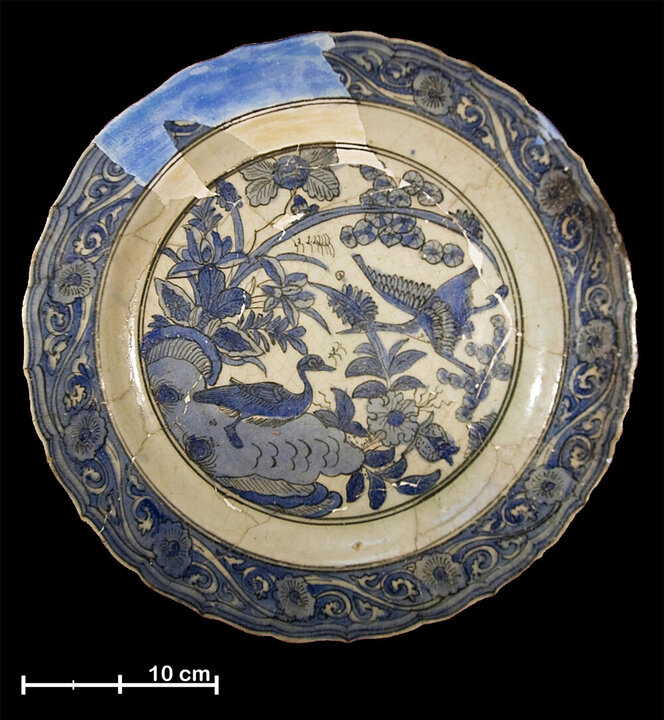
Archaeological excavations at some of the sites of the castles of Alamut discovered a variety of kilns, some of which contained fragments of decorated dishes, water-pots, and oil lamps, among other items. Much of the evidence has been removed as a result of land cultivation for agriculture.

“In 1972 Peter Willey’s team archaeologist, Tony Garnett, reported that their most important discovery was at Andej, a small attractive village near Alamut, the site of Hasan Sabbah’s headquarters before his occupation of the citadel at Alamut.”1

“Garnett continues to describe a structure that was excavated on the eastern slope, which he interpreted as a kiln…

“Inside the kiln was a variety of pottery, including the large fragment of a complex of a decorated dish, several tripod stilts, pieces of glazed dishes and unglazed cook-pot ware, heavily textured with inclusions. On other parts of the kiln site were found two glazed oil lamps, part of a basalt quern-stone, several small bowls, and many pieces of sintered kiln fabric and over-fired kiln wasters, together with large quantities of decorated fragments.”1


Exterior view of Samiran bowl. Photo: Eagle’s Nest

A blue-glazed water pot, possibly from Hanarak. Photo: Eagle’s Nest

Agate beads and fine moulded wares from Andej. Photo: Eagle’s Nest
Sources:
1“Ismaili Pottery from the Alamut Period,” by Rosalind A. Wade Haddon, published in Eagles’s Nest, Ismaili Castles in Iran and Syria, by Peter Willey, I.B. Tauris Publishers, London, 2005
Farhad Daftary, A Short History of Ismailis, Edinburgh University Press

Compiled by Nimira Dewji
https://ismailimail.wordpress.com/2016/ ... of-alamut/
Admin
Posts: 6888
Joined: Mon Jan 06, 2003 10:37 am
Contact:

Post by Admin »

https://www.msn.com/en-au/news/world/wa ... r-BB15dqiW

Was the medieval order of Assassins a real thing?

The ruins of the Nizari fortress of Masayf in Syria. The Nizari Ismailis, often referred by the pejorative term Assassins, operated out of fortified castles during the medieval period.
Did a secretive order of assassins once covertly control the Middle East? It’s a tempting legend tailor-made for video games and Crusader-era chronicles. But the word “assassin” actually derives from a pejorative term for the Nizari Ismaili state, a secretive but short-lived group of medieval Shiite Muslims.

The Nizaris’ origins go back to the original schism in Islam in A.D. 632, when an argument over who should succeed the Prophet Muhammad as imam, or leader, split the Muslim community into Shiites and Sunnis. Then, in the ninth century, another disagreement over leadership arose among Shiites. Followers of a leader named Ismail broke off into their own sect, the Ismailis.

n 1095 an Ismaili prince named Nizar was in line to rule Cairo. When he was passed over in favour of his younger brother, Nizar briefly seized and ruled Alexandria but was executed. His followers fled to Persia, where they founded their own branch of Ismailism and established their own line of succession. Ismaili missionary Hassan-i-Sabbah became the Nizaris leader.

Painted as decadent heretics, the Nizari were hated by Shiite and Sunni Muslims alike. Outnumbered and surrounded by enemies on all sides, the embattled Nizari state did what it needed to survive. The sect created strongholds in the mountains of Persia and Syria and trained a select group of fighters called fedayeen, or “those who sacrifice themselves.” Fedayeen were known both for their devotion and their deadliness.


Traditional military tactics would have been useless for the outnumbered Nizari. Instead, the fedayeen carried out almost surgical strikes against selected political targets. Trained to infiltrate, kill, and submit to torture and death if necessary, the Nizari fedayeen gained an outsized reputation. Christian Crusaders, newly arrived in the Holy Land, also learned to fear the fedayeen, though the Nizari did form alliances with Crusaders in some situations.

Historians believe that Western observers, who did not understand why the Nizari fought with guerrilla tactics, assumed they were under the thrall of some kind of drug-like hashish. The Arabic word Hashishin, or “hashish users,” was applied pejoratively to the Nizaris by other Muslim groups, then adopted by Crusaders and westernized as Assassins. Eventually, the misnomer morphed into the modern English word for a paid murderer.

Marco Polo and others circulated lurid legends about the Assassins, including claims that the fedayeen were in thrall to the Old Man of the Mountain, a successor of Hassan who was rumoured to use drugs to intoxicate the young men, then trick them into fighting with promises of a decadent false paradise he created within his fortress walls. “Rooted in fear, hostility, ignorance and fantasy, myths of the Ismailis have fired the popular imagination of countless generations,” writes historian Farhad Daftary.

The Nizari Ismaili state managed to survive for 166 years. But it could not withstand the Mongols, who began their conquest of the Islamic world in 1219 and pushed the Nizaris out of fortress after fortress. Finally, in the face of the loss of all of their strongholds, the surviving Nizaris fled.

Centuries after the Nizari state fell, the Ismaili religious sect endures. Today, up to 15 million Ismailis can be found in more than 25 countries around the globe, and Ismailis are the second-largest group of Shia Muslims. The majority of Ismailis are still Nizari and accept Shāh Karim al-Husayni as Aga Khan, an honorary title used by Nizari Ismaili leaders since the 19th century.

While the days of targeted killings are long past, salacious and incorrect legends of the Nizari live on in popular culture: The Assassin’s Creed series of video games has become one of the best-selling video game franchises of all time—but the secretive, sensationalist picture it paints of the Assassins has no basis in reality.
kmaherali
Posts: 24562
Joined: Thu Mar 27, 2003 3:01 pm

Post by kmaherali »

Alamut, Ismailism and Khwaaja Qasim Tushtari’s Recognizing God

Shafique N. Virani
Department of Historical Studies, University of Toronto

Abstract

Drawing extensively on the testimony of the Persian historians of the seventh-eighth hijri centuries (corresponding to the thirteen-fourteenth centuries of the Christian era), this article sketches a detailed picture of several personalities involved in founding the nascent Ismaili state centred at Alamut in the fifth/eleventh century. This background sets the stage for analyzing a new manuscript source documenting Ismaili history and thought of this period, Khwaaja Qaasim Tushtari’s Recognizing God ( Marifat-i Khudaay ta aalaa). After outlining and amending previous scholarship on this author and surveying the text’s extant manuscript and lithographic sources, the article analyzes the historical references, focusing on the figure of Sharaf al-Din Muhaammad, and examining the evolution of the Ismaili leadership structure. It argues for a likely date of composition between 525/1131 and 533/1139, making Tushtari’s Recognizing God one of the oldest Ismaili texts from Alamut still in existence.

Keywords

Ismaili – Alamut – Qaasim Tushtari – Ḥasan-i Sabbaah– Saljuq – Rais Muzaafar – mukhi – Ginan – Girdkuh – Sanjar

The article can be accessed at:

https://www.academia.edu/37219850/Alamu ... view-paper
kmaherali
Posts: 24562
Joined: Thu Mar 27, 2003 3:01 pm

Post by kmaherali »

Today in history: Hasan-i Sabbah acquired the fortress of Alamut

Posted by Nimira Dewji
On September 4, 1090 Hasan-i Sabbah acquired Alamut, a remote mountain-fortress in the Rudbur region of Daylam in northern Persia (modern-day Iran), marking the founding of the Nizari Ismaili state. According to the Persian chronicles, Hasan gave the owner of the fortress a draft of 3,000 gold dinars as the price of the castle.

Alamut hasan sabbah draft
Image
A 17th-century copy of the first six lines of text of the sale of Alamut document.
Source: The Ismailis An Illustrated History
The Fatimid empire had begun to decline during the latter part of Imam al-Mustansir bi’llah I’s reign (r.1036-1094) due to internal conflicts and strife. Anticipating the crisis, Hasan-i Sabbah, took measures to establish an independent state to continue to uphold the Imamat of Imam Nizar as designated by his father.

Upon the death of Fatimid Caliph-Imam al-Mustansir bi’llah, the dispute over his successor divided the community. Imam had designated his son Abu Mansur Nizar as his successor, but his younger brother Abu’l-Qasim Ahmad, with the title al-Musta’lian, was placed on the Fatimid throne by the vizier. Those who followed al-Musta’li came to be known as Musatli Ismailis while those who upheld the rights of Imam Nizar and his descendants came to be known as Nizari Ismailis, who have continued to be led by a living hereditary Imam to the present day.

The Musta’lian Ismailis continued to rule from Cairo until 1171 when they were succeeded by the Ayyubids. The Musta’li Ismailis later split into the Hafizi and Tayyibi branches.

The Tayyibi Ismailis of the Indian subcontinent are often referred to as Bohras perhaps “from the word bohra (bohora) generally held to have been derived from the Gujarati term vohorvu, meaning to trade” (Daftary, Historical Dictionary of the Ismailis, p 32). Hindu converts to Tayyibi Ismailism were largely traders.

Alamut Ismailis
Image
Remains of fortifications on Alamut rock. Image: Peter Willey, Eagle’s Nest. Ismaili Castles in Iran and Syria
Over the course of the next 150 years, the Ismailis acquired more than 200 fortresses in Iran and Syria, located in the inaccessible mountainous regions for refuge of Ismailis who were fleeing persecution. Their settlements were also a sanctuary for other refugees, irrespective of their creed, fleeing persecution and invasions.

Fortresses
Image
* Fortresses of the Nizari Ismailis. Source: The Ismailis An Illustrated History

Hasan-i Sabbah fortified Alamut, constructing large storage facilities for food and water to withstand long periods of attacks. He developed an extensive irrigation system and introduced the terracing of slopes to maximise the area to cultivate barley, wheat, and rice fields.

A learned theologian, scholar, and poet, Hasan-i Sabbah established a major library at Alamut. The Nizari Ismailis of the Alamut period continued to place a high value on intellectual activities despite having to defend against military attacks. Alamut and several of the Nizari strongholds became flourishing centres of intellectual activities with major libraries containing not only a significant collection of books and documents but also scientific tracts and equipment. Among the notables who used the library was Nasir al-Din al-Tusi (d. 1274), who stayed at Alamut for about thirty years, playing an active part in the intellectual life of the Nizari Ismaili community. He composed numerous works on ethics, theology, astronomy, and philosophy including the famous Sayr wa suluk (‘Contemplation and Action’), which focuses on his search for religious and scientific knowledge. His earliest Ismaili works, the Akhlaq-i Muhtashami (‘Muhtashmid Ethics’), comprises forty chapters on various topics of ethical behaviour based on the Quran, hadith, the sayings of Ismaili Imams, as well as the writings of Ismaili and other writers.

Once established at Alamut, Hasan-i Sabbah sent da’is to various regions to continue the da’wa, which had spread eastward to the Oxus valley where da’is such as Nasir-i Khusraw had been active during the time of Fatimid Caliph-Imam al-Mustansir bi’llah. Da’is from Alamut were also dispatched to Syria where they operated from Aleppo and subsequently from Damascus.

During the Alamut period, Imam Mustansir bi’llah’s successors lived discreetly in order to avoid persecution; their identities and whereabouts were known to a few trusted da’is. Hassan-i Sabbah and his next two successors Kiya Buzurg-Umid (r. 1124-1138) and Muhammad b. Buzurg-Umid (r. 1138-1162) led the community on behalf of the Imams, until the time of Imam Hasan ala dhikihi’l-salam (r. 1162-1166) who emerged to lead the community.

According to ginanic literature tradition, Pir Satgur Nur, also called Nur al-Din, was the first Nizari da’i sent from Alamut to the Indian subcontinent to teach Ismaili doctrines. Reference to Alamut is made in several ginans including Pir Sadr al-Din’s composition Dhan dhan aajno dadalore, verse 2:

Eji aalmot gaddh paattann, delam deshajee
teeyaa avtareeyaa shaah maankhaa veshjee…….het no………

O momins, in Daylam, in the Fort of Alamut, the Lord has manifested Himself.
Have a gathering…
Listen to the ginan

Sources:
Farhad Daftary, The Ismailis: Their history and doctrines, Cambridge University Press, 1990
Farhad Daftary, Historical Dictionary of the Ismailis, Scarecrow Press Inc., 2012
Peter Willey, Eagle’s Nest: Ismaili Castles in Iran and Syria, I.B. Tauris in association with The Institute of Ismaili Studies, 2005
Shafique Virani, The Ismailis in the Middle Ages, Oxford University Press, 2007

nimirasblog.wordpress.com/2020/09/04/sep-4today-in-history-hasan-i-sabbah-acquired-the-fortress-of-alamut/
mahebubchatur
Posts: 873
Joined: Mon Jan 13, 2014 7:01 pm

Alamut Period

Post by mahebubchatur »

The Alamut Independent Ismaili Persian State
Period (483/1090 – 654/1256)

The Alamut period lasted 171 years and marks a defining era in Nizari Ismaili history. During this time, the Imams were present but often in concealment (satr). Governance and administration of the faith were carried out by highly capable Chief Dāʿīs, who conveyed and upheld the Imam’s Farmans to the wider community.


Stories of the Ismaili Imams: Mawlana al-Hadi

by TheIsmaili

20th Ismaili Imam – Al-Hadi (Alamut period)

Video: The Ismaili
https://x.com/TheIsmaili/status/2008554 ... 58/video/1

https://x.com/chaturmahebub/status/2008 ... hqfO552USg

Mawlana al-Hadi (peace be upon him) succeeded to the Imamat in 1095, after Mawlana Nizar (peace be upon him) was deposed and killed by the Musta‘li Fatimids. Using the code name al-Hadi, meaning “The One who Guides”, he spent his entire Imamat in hiding from the Musta‘li Fatimids, so very few details are known about him.

It is a fact that Mawlana Nizar had at least two sons, al-Hasan and al-Husayn, and some of his descendants continued living in Egypt and North Africa. From 1131 to 1161, Imam Nizar’s descendants launched at least three unsuccessful revolts against the Musta‘li Fatimids.

Some sources identify Mawlana al-Hadi as Imam Nizar’s son al-Hasan, who lived in North Africa. At some point, either Mawlana al-Hadi or his son Mawlana al-Muhtadi (peace be upon him) was secretly taken to Alamut under the care of Ḥasan-i Ṣabbāḥ, who established the Ismaili independent state at Alamut.

“Much have I gone astray;
Now I will never stray from Your door.
For me, there is no path
Other than Yours.”
— Ḥasan-i Ṣabbāḥ
YouTube link

https://youtube.com/shorts/ZkfYJ2VXIsQ? ... TJbMlXKMe6


Selected Farmans from the Period
• “Do not seek loyalty from one to whom you have been disloyal; his heart toward you is as yours is toward him.”
• “Beware of arrogance, for it is the garment of God; whoever contends with Him over it will be destroyed.”
• “He who fears God will be feared by others; and he who obeys God will be obeyed.”

Before Alamut, the first nine Fatimid Imams guided the community – Summary of Fatimid Imams.

viewtopic.php?p=75294#p75294


Alamut Leadership: Chief Dāʿīs

In the early Alamut period, the faith and governance were managed under the direction of Farmans from the Imams by these Hujjats (Chief Dāʿīs):
1. Ḥasan ibn Ṣabbāḥ (483–532 / 1090–1138) – founder of the Alamut state; central in consolidating Nizari power in Persia.
2. Kiyā Buzrug Ummīd (532–544 / 1138–1162) – appointed by Ḥasan ibn Ṣabbāḥ; strengthened fortresses and administration.
3. Muhammad ibn Kiyā Buzrug (544–554 / 1162–1160) – son of Kiyā Buzrug Ummīd; briefly led the Alamut state.

Other important Dāʿīs and figures who contributed to the survival and expansion of the Nizari Ismaili state include:
• Kiyā Muḥammad ibn Buzrug – sometimes referenced as overlapping Muhammad ibn Kiyā Buzrug.
• Alāʾ al-Dīn Muḥammad ibn Ahmad (d. ca. 569/1173) – active in Syria and Persia; maintained the Syrian Nizari network.
• Abū ʿAli al-Khūrāsānī – senior Syrian Dāʿī under the early Alamut leadership.
• Rashid ad-Dīn Sinan (d. 1193) – the famous “Old Man of the Mountain” in Syria; coordinated closely with Persia.
• Kiyā Abu’l-Fath al-Sa’idi – involved in administration and military coordination.

These Dāʿīs worked closely with the Imams, who remained concealed (satr), ensuring both spiritual guidance and political survival.


The Imams of the Alamut Period
1. Imam Hadi bin Nizar (490–530 / 1097–1136)
2. Imam Mohtadi bin Hadi (530–552 / 1136–1157)
3. Imam Kahir (552–557 / 1157–1162)
4. Imam Hasan Ala Zikrihi’s Salam (557–561 / 1162–1166)
5. Imam Ala Muhammad (561–607 / 1166–1210)
6. Imam Jalaluddin Hasan (607–618 / 1210–1221)
7. Imam Alauddin Muhammad (618–653 / 1221–1255)
8. Imam Ruknuddin Khurshah (653–655 / 1255–1257)


Additional References / Videos
• Video: The Ismaili on Mawlana al-Hadi

https://x.com/TheIsmaili/status/2008554 ... 58/video/1

• YouTube Short: Hasan-i Sabbah Quote

https://youtube.com/shorts/ZkfYJ2VXIsQ? ... TJbMlXKMe6

• Summary of the nine Fatimid Caliphs & Imams

viewtopic.php?p=75294#p75294
mahebubchatur
Posts: 873
Joined: Mon Jan 13, 2014 7:01 pm

Re: Alamut

Post by mahebubchatur »

Mawlana Hasan Ala Dhikrihi al-Salam conveyed a milestone Farman declaring the Qiyāma — a new era of spiritual resurrection & divine truths.

“The Farman was addressed to "MEN, DJIN, ANGEL of the Universe".

Ten weeks later, a token ceremony of Qiyama was commemorated at the fortress of Muminabad, to the east of Birjand in Kohistan, where Hasan II had sent his messenger, Muhammad Khaqan to Rais Muzaffar, his deputy who headed the Ismailis of Kohistan since 555/1160. It was celebrated in the fortress of Muminabad on 8th Zilkada, 559/September 18, 1164, where the written sermons -Farmans of Hasan II were read.”

https://x.com/chaturmahebub/status/2009 ... hqfO552USg

https://www.facebook.com/IsmailiHeritag ... 420672728/

https://www.bloomsburycollections.com/m ... 3-chapter6
mahebubchatur
Posts: 873
Joined: Mon Jan 13, 2014 7:01 pm

Re: Alamut

Post by mahebubchatur »

#Ismaili Imam
Rukn al-Din Khurshah

The Mongol destruction was among the most devastating events in #Ismaili Nizari history—echoing Karbala and earlier massacres.

From this emerged the Period of “Pirs” sustaining faith & taʿlim. More👇🏽

viewtopic.php?p=75334#p75334

Link to Video clip https://x.com/chaturmahebub/status/2011 ... hqfO552USg


By TheIsmaili

*Stories of the Ismaili Imams: Mawlana Rukn al-Din Khur Shah*

Mawlana Rukn al-Din Khur Shah (peace be upon him) was born in 1230 in Rudbar in northern Persia. He succeeded to the Imamat on 1 December 1255 at the age of 25, amidst the Mongol military campaign against the Nizari Ismailis of Persia. He unsuccessfully tried to negotiate, and on 19 November 1256, he was forced to surrender after a two-month campaign in Rudbar. In March 1257, the Imam travelled to Mongolia, but the Great Khan refused to meet him. After an Imamat of just over one year, Mawlana Rukn al-Din Khur Shah was killed by his Mongol guards in the late spring of 1257.

“I stood in Abadan looking into the Tigris,
like red blood flowing to the sea.
Do not ask me what the separation has done to my heart;
the wounds in my heart cannot be known by probing.”

- Sa‘di Shirazi, on the Mongol destruction of Baghdad in 1258

https://youtube.com/shorts/Ag-l4q4UD_w? ... Bc-S6OHkY_

#ImamatDay #Ismaili
Admin
Posts: 6888
Joined: Mon Jan 06, 2003 10:37 am
Contact:

Re: Alamut

Post by Admin »

Alamut cited as a historic evidence of political, cultural and engineering ingenuity in UNESCO

July 12, 2026


TEHRAN – Mohammad-Hassan Talebian, manager of the UNESCO nomination dossier for the Cultural Landscape of Alamout, said the site represents evidence of political, cultural and engineering ingenuity during a specific period of Iran’s history, as the country seeks inscription of the property on the UNESCO World Heritage List.

Image

Talebian said a technical evaluation by the International Council on Monuments and Sites (ICOMOS) had confirmed one of the criteria for the Outstanding Universal Value of the serial nomination, which consists of seven strongholds and related fortifications linked to the Nizari Ismaili state of the 11th to 13th centuries. (Nizari Isma'ilis were the largest segment of the Ismailis, who were the second largest branch of Shia Islam after the Twelvers.)

According to Talebian, the nomination presents an integrated picture of governance, engineering, water management, territorial defense and cultural life through a network of interconnected fortifications in the eastern and western Alamut regions on the southern slopes of the Caspian Sea.

Talebian said the seven components formed a coherent defensive and administrative system connected through visual, structural and functional relationships across the Alamut valley. Comparative studies with similar sites in Iran, Syria, Jordan and Europe identified the network as an exceptional example of mountain governance and defense, he said.

He said Alamut Castle, built atop a high rock outcrop, served as the political, administrative, cultural, religious and intellectual center of the Nizari Ismaili state, while the other fortifications provided surveillance, defense, logistical support and control of communication routes.

The fortifications incorporate advanced engineering, water storage systems, food depots, watchtowers, tunnels, canals and defensive structures designed in coordination with the surrounding mountain environment, Talebian said.

He said the defensive system extends across roughly 2,000 square kilometers and includes villages, farms, orchards and agricultural systems supported by local water resources, forming what he described as a coherent cultural landscape.

Talebian said Alamut was also a major intellectual center, citing its library and the presence of scholars from Iran and across the Islamic world engaged in astronomy, medicine and philosophy.

Among the individual components, Talebian said Lambsar Castle played a strategic role in defending the western approaches to Alamut and resisted Mongol attacks for years. Navizarsah Castle occupied a commanding position over the surrounding region, while Shams Kalayeh demonstrated the integration of architecture with the mountain landscape through its use of natural caves, stairways and fortified walls.

Shirkuh contained 11 cisterns and a complex system for collecting and storing rain and snow water, while Qostin Lar and Ilan helped control regional access routes, Talebian said.

He said the nomination’s significance lay in preserving architecture, engineering, water management, agriculture, defense, governance, social and economic life, and spatial organization within a single integrated system.

According to Talebian, ICOMOS recommended recognition under Criterion III of the World Heritage Convention, concluding that the property provides exceptional testimony to the cultural tradition of the Nizari Ismailis during the 11th to 13th centuries. The report also confirmed the authenticity and integrity of the property, conservation programs, management systems, tourism planning concepts, monitoring mechanisms and community participation.

The nomination will be examined at the upcoming session of the UNESCO World Heritage Committee in Busan, where a final decision on inscription will be made.

Talebian said the mountainous location of the fortifications and the difficulty of access in the Alborz Mountains had made the dossier one of Iran’s most complex World Heritage nominations, requiring years of documentation, archaeological research, conservation work and multidisciplinary studies.

Alamut fortifications were captured by Mongol ruler Hulagu Khan in 1256 using diplomatic trickery, having earlier forced the surrender of the Ismailis’ spiritual leader (Sabbah’s successor).

Sabbah’s rule from Alamut (which he renamed the City of Good Fortune) is shrouded in mystery and enigma. This is partly because most Ismaili records of the era were destroyed by the invading Mongols while the writings of their detractors survived.

For centuries, Alamut Castle was almost forgotten and only returned to public consciousness with the publication of Stark’s 1930s travel diary, Valleys of the Assassins. A copy of that recently reprinted volume makes a great companion for the trip.

AM
Admin
Posts: 6888
Joined: Mon Jan 06, 2003 10:37 am
Contact:

Re: Alamut

Post by Admin »

https://www.tehrantimes.com/news/528556 ... d-Heritage

UNESCO grants World Heritage status to Iran’s Alamut Castle and Related Fortifications - Tourism

July 26, 2026


Image
TEHRAN – Iran’s “Alamut Castle and Related Fortifications” has been inscribed on UNESCO’s World Heritage List, becoming the country’s 30th tangible cultural heritage property to receive the prestigious international designation.

The decision was adopted on Sunday during the 48th session of the UNESCO World Heritage Committee in Busan, South Korea, marking another milestone in Iran’s long-standing presence on the World Heritage list.

The newly inscribed serial property consists of seven historic castles and fortifications spread across the eastern and western Alamut valleys and the southern slopes of the Alborz mountain range in Qazvin province. The property includes Alamut Castle, Lambsar, Navizarshah, Shams-Kelaye, Qostinlar, Shirkuh and Ilan, all of which formed an interconnected defensive and administrative system between the 11th and 13th centuries.

The UN cultural body recognized the property as an exceptional example of a fortified mountain landscape that illustrates sophisticated planning based on a detailed understanding of geography, communication routes, defensive architecture, water-resource management and spatial organization.

From the late 11th century CE, Alamut served as the political, military and intellectual center of the Nizari Ismailistate, an influential Islamic movement whose influence extended across Iran and much of the Islamic world.

Image

A general view of Alamut Castle

Beyond their military role, the fortifications functioned as centers of scholarship and culture. The network provided refuge for the Nizari community while fostering scientific and intellectual activity until the Mongol conquest of Alamut in 1256. Even after the fall of the fortress, the sites continued to influence the region’s religious and intellectual history.

As mentioned by experts, together, the seven fortifications illustrate the strategic organization, resilience and cultural significance of the Nizari Ismailistate during one of the most dynamic periods of medieval Iranian history.

Last week, Veteran Iranian cultural heritage expert Seyyed Mohammad Beheshti, noted that the property is one of the most significant defensive systems ever created in Iran’s central Alborz Mountains and fills an important gap in understanding the evolution of Iranian architecture and military organization.

“The chain of Iran’s architectural history cannot be fully understood without Alamut,” Beheshti said.

He explained that the mountainous landscape of the central Alborz had long served as a natural fortress, providing refuge for local rulers, communities and military forces throughout different periods of Iranian history.

Because of these geographical characteristics, many of the surviving historical monuments in the region consist of defensive castles and mausoleums, reflecting the area's strategic importance over many centuries, he said.

Archaeological Artifact of the ACRF

Beheshti noted that archaeological evidence indicates many of the region’s fortifications had already been in use during the Parthian period. Following the establishment of the Nizari Ismailistate during the Seljuk era, the existing network was expanded into a coordinated defensive system with Alamut Castle serving as its central command.

He said the UNESCO inscription recognizes not merely a collection of historic buildings but an important chapter in Iran’s cultural and political history associated with the Nizari Ismailis.

Alamut Castle also occupies a special place in Iranian architectural history because relatively few structures dating to the Seljuk period and earlier have survived intact, Beheshti said. Although smaller than monumental sites such as the UNESCO-listed Bam Citadel, the castle provides exceptionally valuable archaeological and architectural evidence for understanding construction techniques and architectural development during the medieval period.

He added that archaeological excavations, conservation projects and documentation began in the late 1990s under the Alamut Cultural Heritage Base and have continued steadily ever since. He credited the sustained work of numerous specialists, particularly archaeologist Hamideh Choubak, with making possible the preparation of a comprehensive nomination dossier.

Beheshti also highlighted the importance of the serial nomination approach adopted for the World Heritage application. Rather than focusing solely on Alamut Castle itself, the dossier presents multiple castles and associated fortifications as parts of a single cultural landscape spread across the central Alborz Mountains.

In addition, Mohammad-Hassan Talebian, manager of the UNESCO nomination dossier for “Alamut Castle and Related Fortifications,” has said the newly inscribed property presents compelling evidence of political organization, cultural achievement and engineering innovation during a significant period of Iranian history.

According to Talebian, the nomination offers an integrated picture of governance, territorial defense, engineering, water management and cultural life through a network of interconnected fortifications extending across the eastern and western Alamut regions on the southern slopes of the Caspian Sea.

He said the seven components formed a coherent administrative and defensive system connected through visual, structural and functional relationships across the Alamut valley. Comparative studies with similar fortified landscapes in Iran, Syria, Jordan and Europe demonstrated that the Alamut network represents an exceptional example of mountain governance and defense.

Talebian said Alamut Castle, built atop a dramatic rocky outcrop, served simultaneously as the political, administrative, cultural, religious and intellectual center of the Nizari Ismailistate. The surrounding castles complemented its role by providing surveillance, military protection, logistical support and control over strategic communication routes.

He said the fortifications incorporated advanced engineering techniques that enabled communities to thrive in a challenging mountain environment. The system included sophisticated water-storage facilities, food depots, watchtowers, defensive walls, tunnels, canals and other architectural features carefully integrated into the natural landscape.

Image
An aerial view of Alamut Castle

According to Talebian, the broader defensive landscape extends across approximately 2,000 square kilometers and encompasses villages, orchards, agricultural lands and water-management systems that together form a coherent cultural landscape rather than a series of isolated monuments.

He also emphasized Alamut’s role as one of the leading intellectual centers of its time. The fortress housed an important library and attracted scholars from across Iran and the wider Islamic world who pursued studies in astronomy, medicine, philosophy and other sciences. Among the prominent scholars associated with the site was Khajeh Nasir al-Din al-Tusi, one of the medieval Islamic world's most influential scientists and philosophers.

The history of Alamut came to a dramatic turning point in 1256 when the Mongol ruler Hulagu Khan captured the fortifications after employing diplomatic deception and compelling the surrender of the Nizari Ismaili leadership. The conquest brought an end to the state centered at Alamut, while many of its written records were destroyed during the invasion.

The destruction of the Ismaili archives has left many aspects of Alamut’s history shrouded in mystery. Much of what later generations learned about the period came from writings produced by the movement’s opponents rather than from its own historical records.

Image
A view of Lambesar castle

For centuries after the Mongol conquest, Alamut Castle gradually faded from public attention. Interest in the site revived during the twentieth century following the publication of British travel writer Freya Stark’s travel account, Valleys of the Assassins, which introduced the dramatic mountain landscape and its historical legacy to an international audience.

The UNESCO inscription is expected to strengthen international recognition of the Alamut cultural landscape, support continued archaeological research and conservation, and promote sustainable tourism in the region while highlighting one of the most remarkable examples of medieval mountain fortification, governance and intellectual life preserved in Iran.

AM


Image
Post Reply